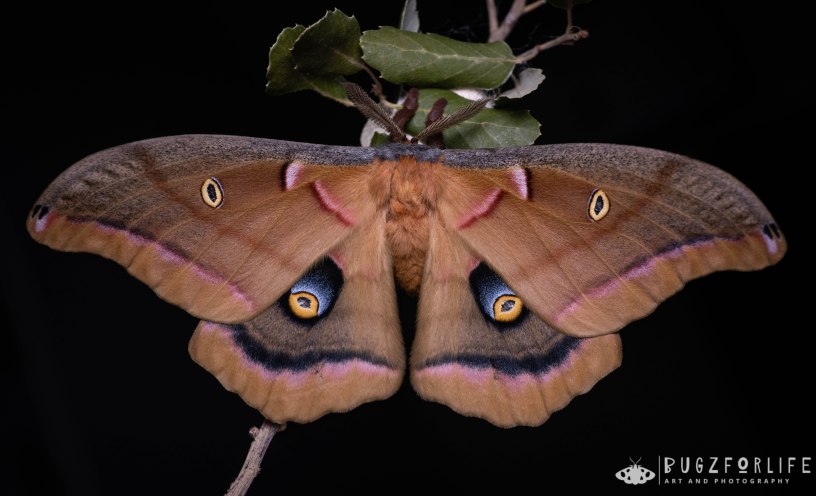
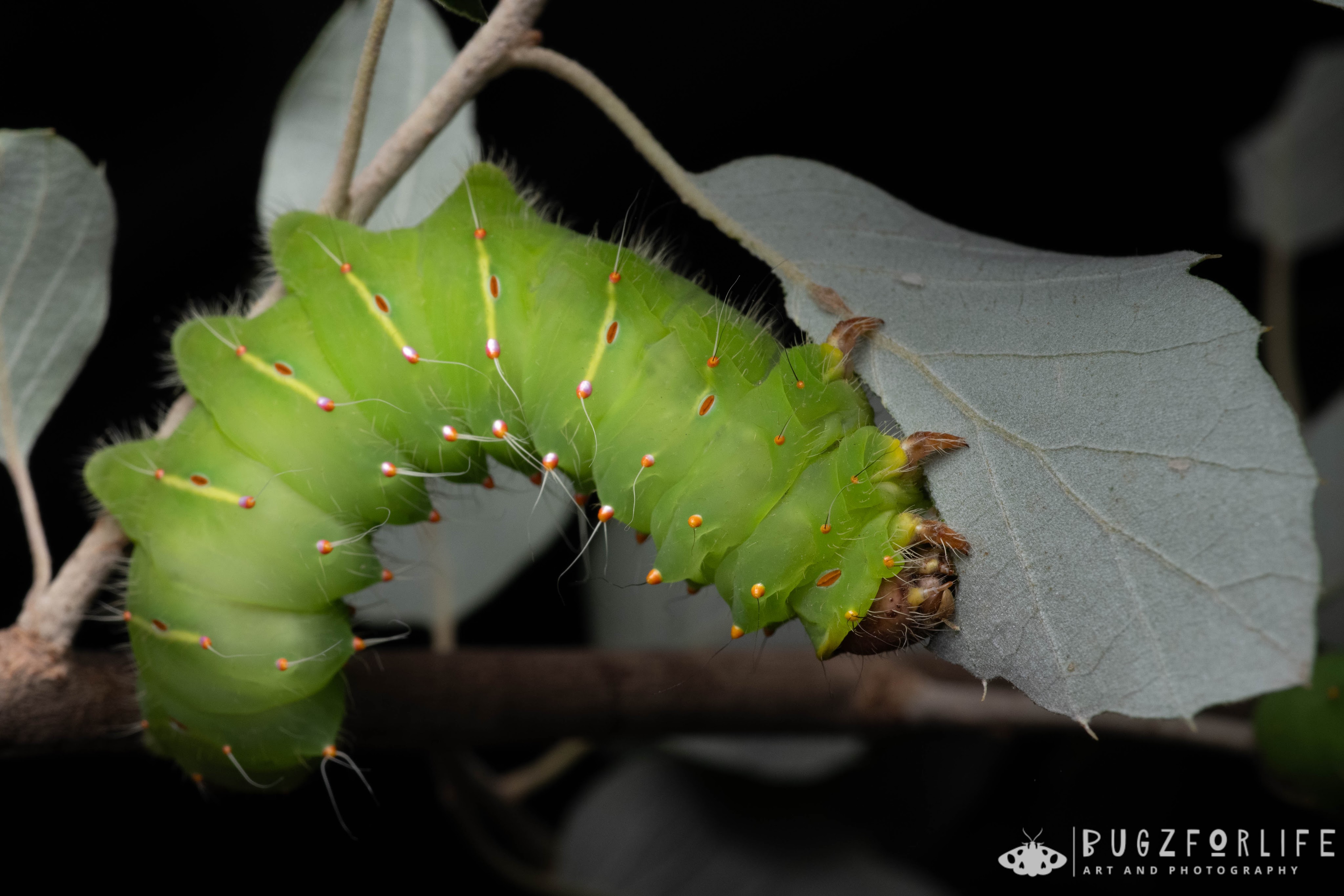
Being the most widespread giant silkmoth in North America, Antheraea polyphemus is well documented. These large moths have amazed me for many years now and despite having reared hundreds to their adult stage, I still find them incredibly fascinating. The Polyphemus moth is one of the largest species of Saturniid in North America and is by far the largest silkmoth found in California. They can be found in urban areas and parks, as well as oak woodlands, mixed deciduous forests, and riparian zones across the state. Their caterpillars are fairly polyphagous and will use many species of trees as hosts, but in the Sac-Yolo Basin where I live, its safe to say they mainly feed on oaks (specifically valley oak, Quercus lobata). In this region they have two generations per year and can be found on the wing from late April to mid May and mid July to early August. Despite its extensive range, it is still considered uncommon or rare in certain areas, so for most people, seeing one of these moths can be quite the shock.
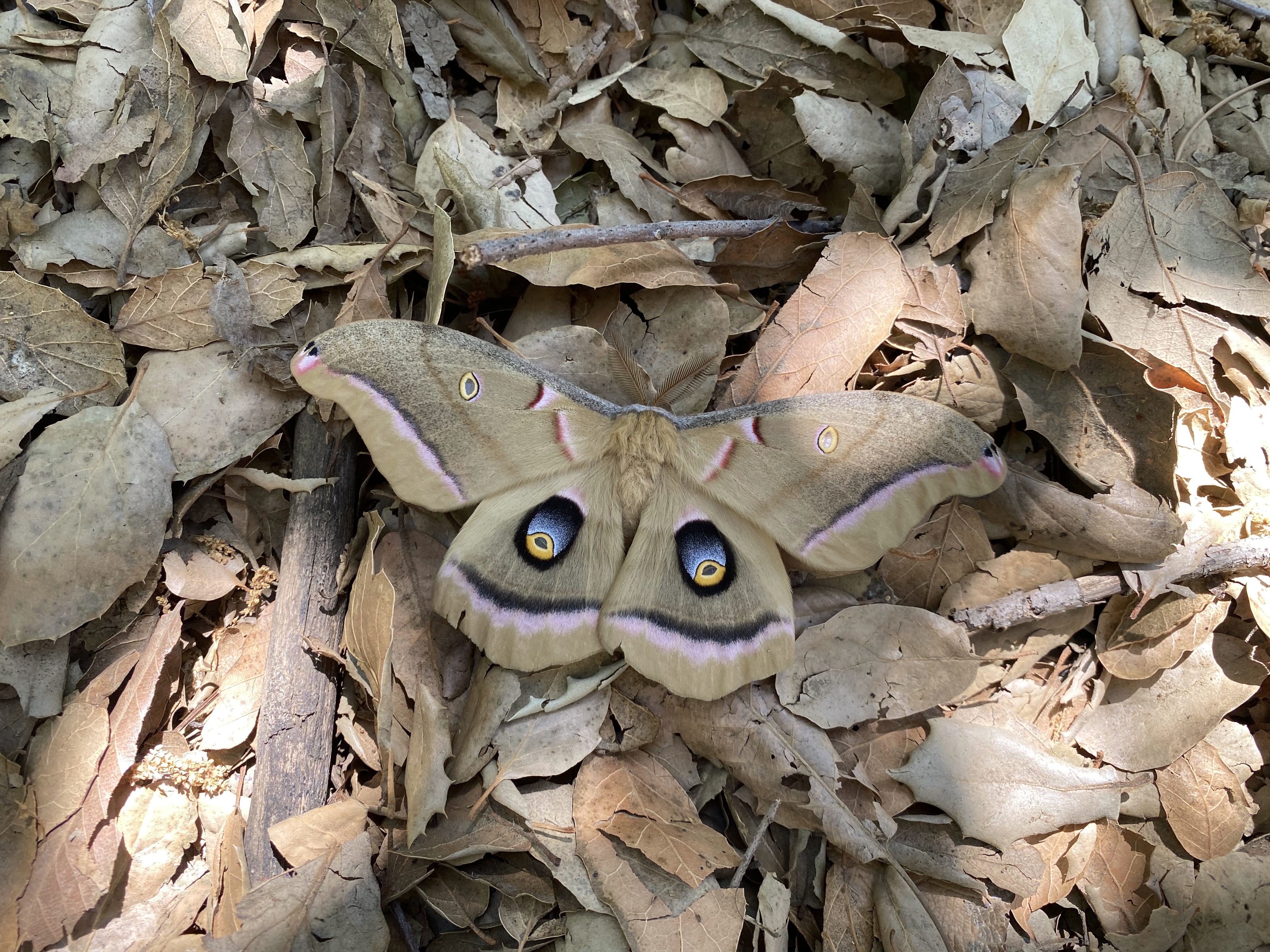
From Adult to Egg
The adult stage of this species is very short, with individuals living up to 7-10 days. Their reproduction usually takes place within the first 3 days of their emergence from their cocoons. Female Polyphemus moths emerge in the late afternoon and once their wings have dried they begin to release their pheromones. The female will continue to release these pheromones into the late hours of the night until a male flies in and begins the mating process. Once the male has paired, they remain connected until the next evening. When the pair disconnects, the male will fly off in search of another possible mate and the female will begin her flight and egg laying process.
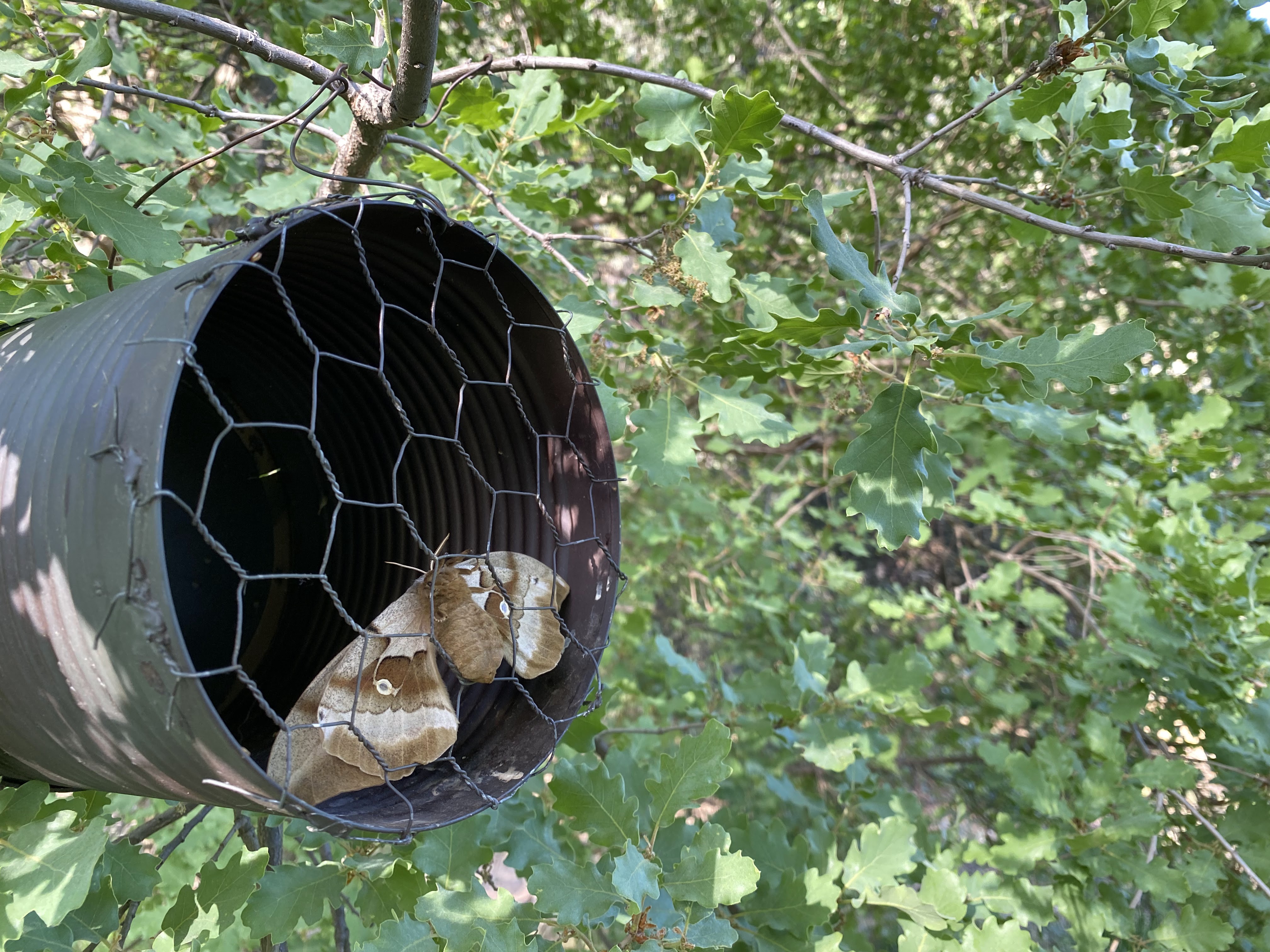
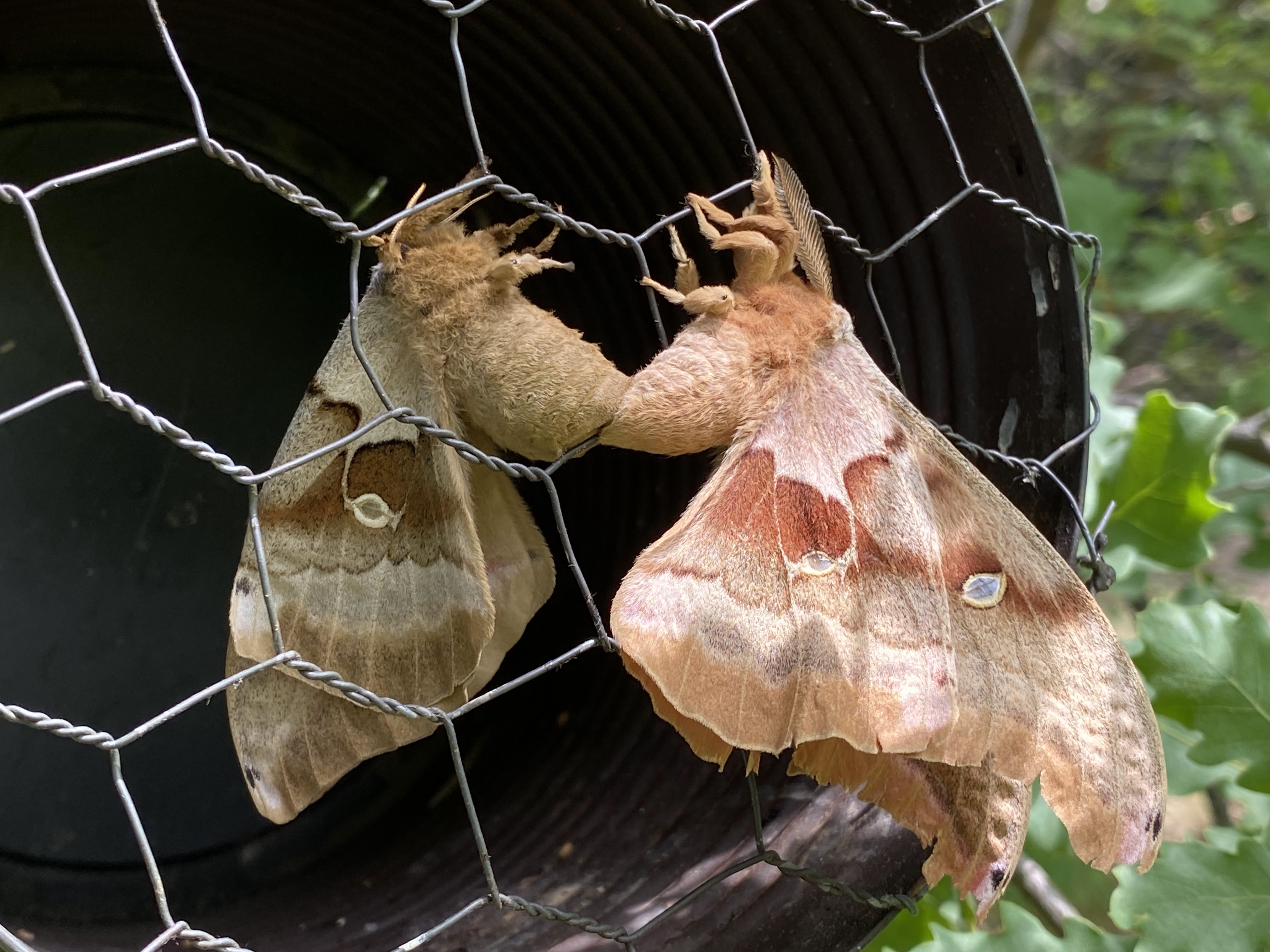
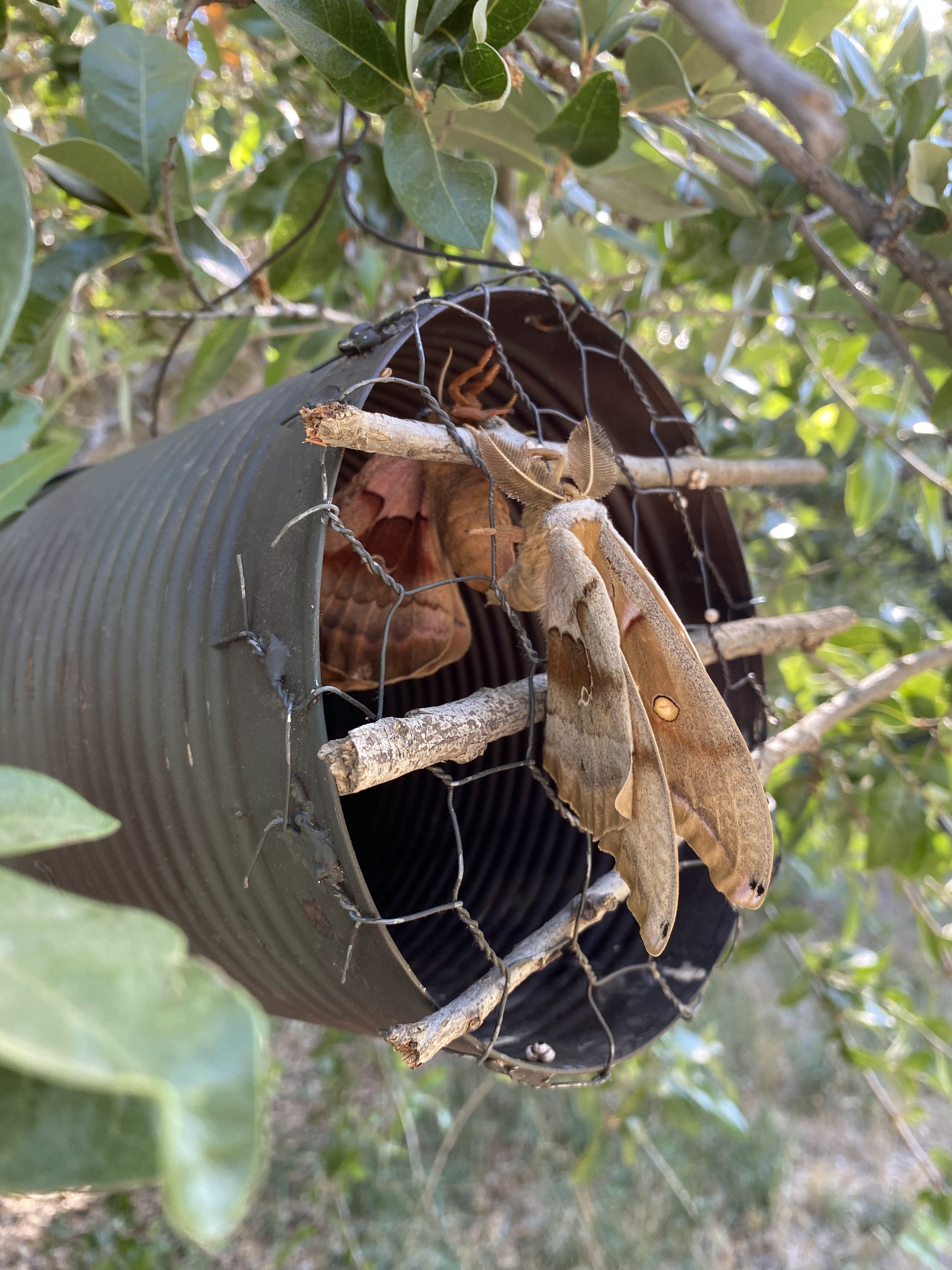
When I have a female Polyphemus moth emerge, I gently place her in the “love can” and transport her to the location where I know a local population is present. In this case I used the oak grove of the UC Davis Arboretum and Public Garden. I set the moth semi tucked into on of the oak trees and leave her be. The following morning I check to see if she paired with a wild male and if so, I transport them together to ensure that copulation is not interrupted and the risk of the male detaching and flying away is minimal.
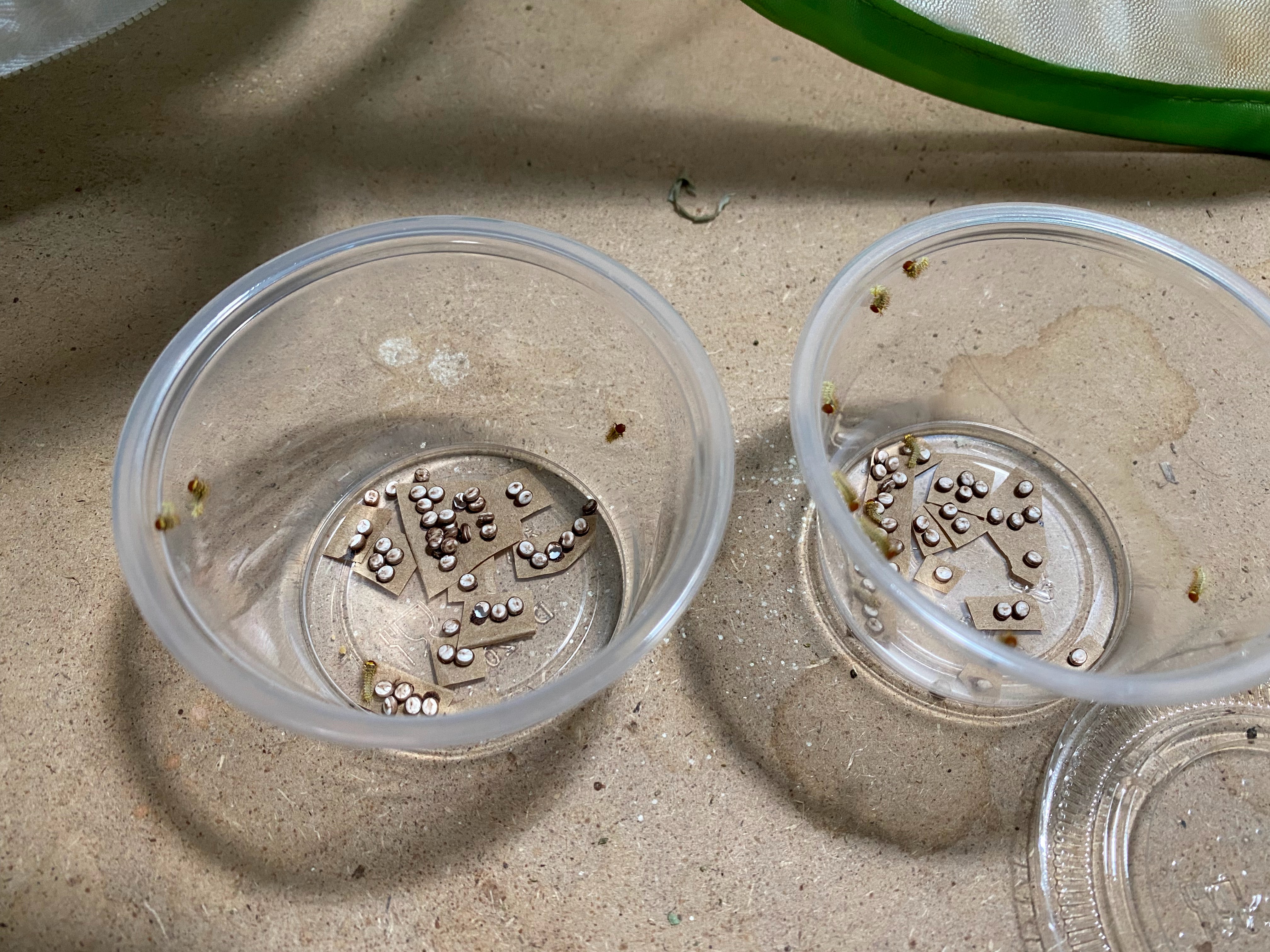
Once they detach naturally, I place the female in a separate mesh cage and release the male. I make sure to photograph the male to document the color and pattern variations that the eventual offspring might inherit. The female will take between 1-2 days to lay nearly all of her eggs and after that process is complete I collect the female to then integrate the specimen into my personal collection. The eggs take between 8-10 days to hatch depending on temperature of the area they are stored in.
From Egg to Cocoon
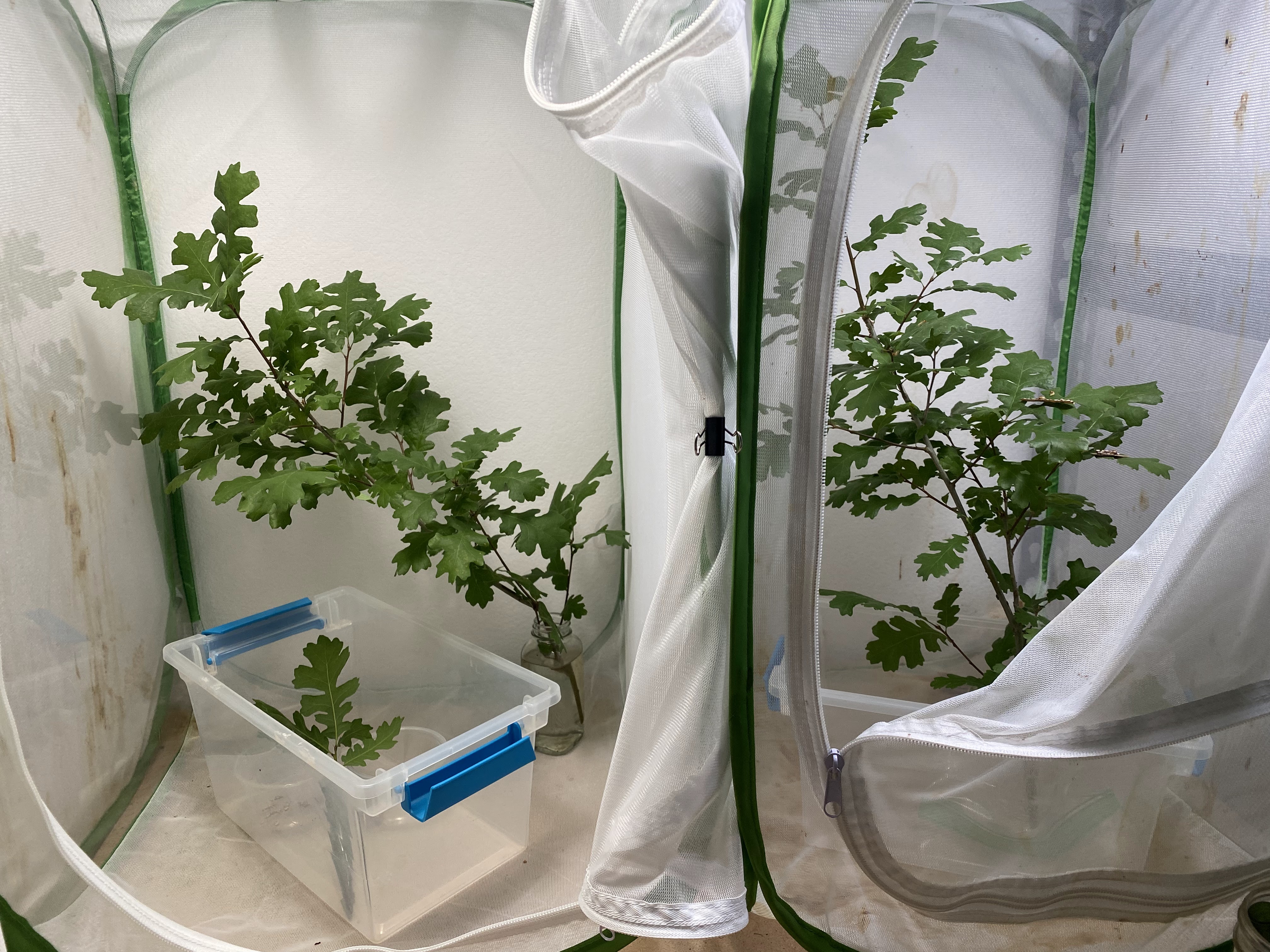
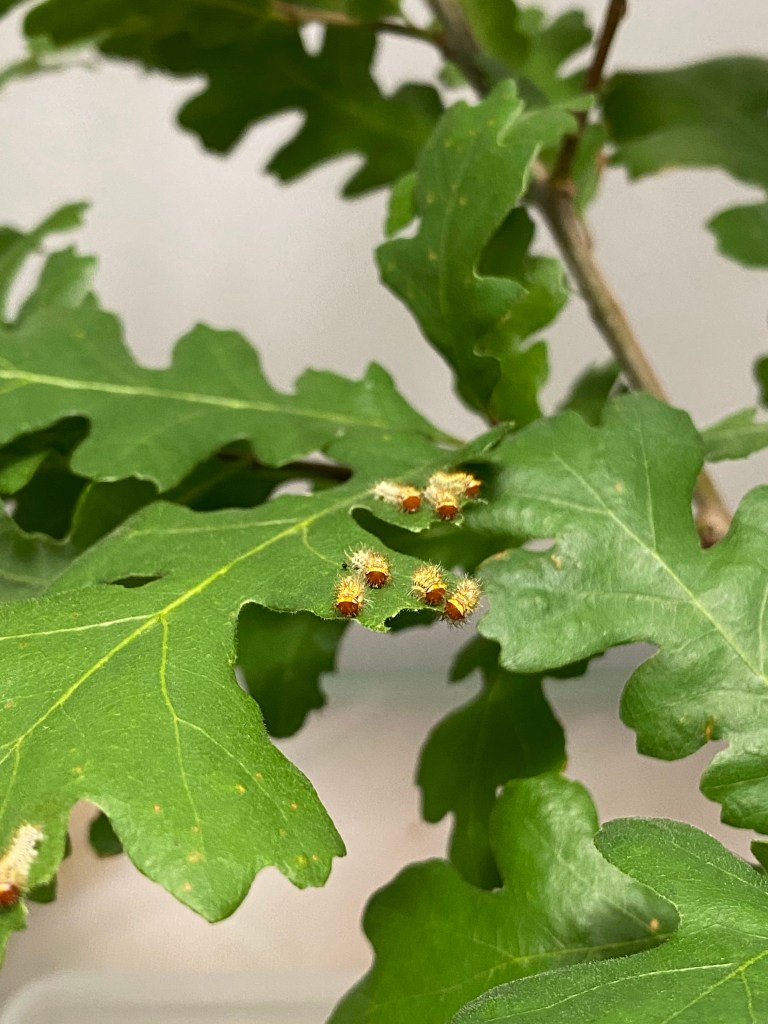
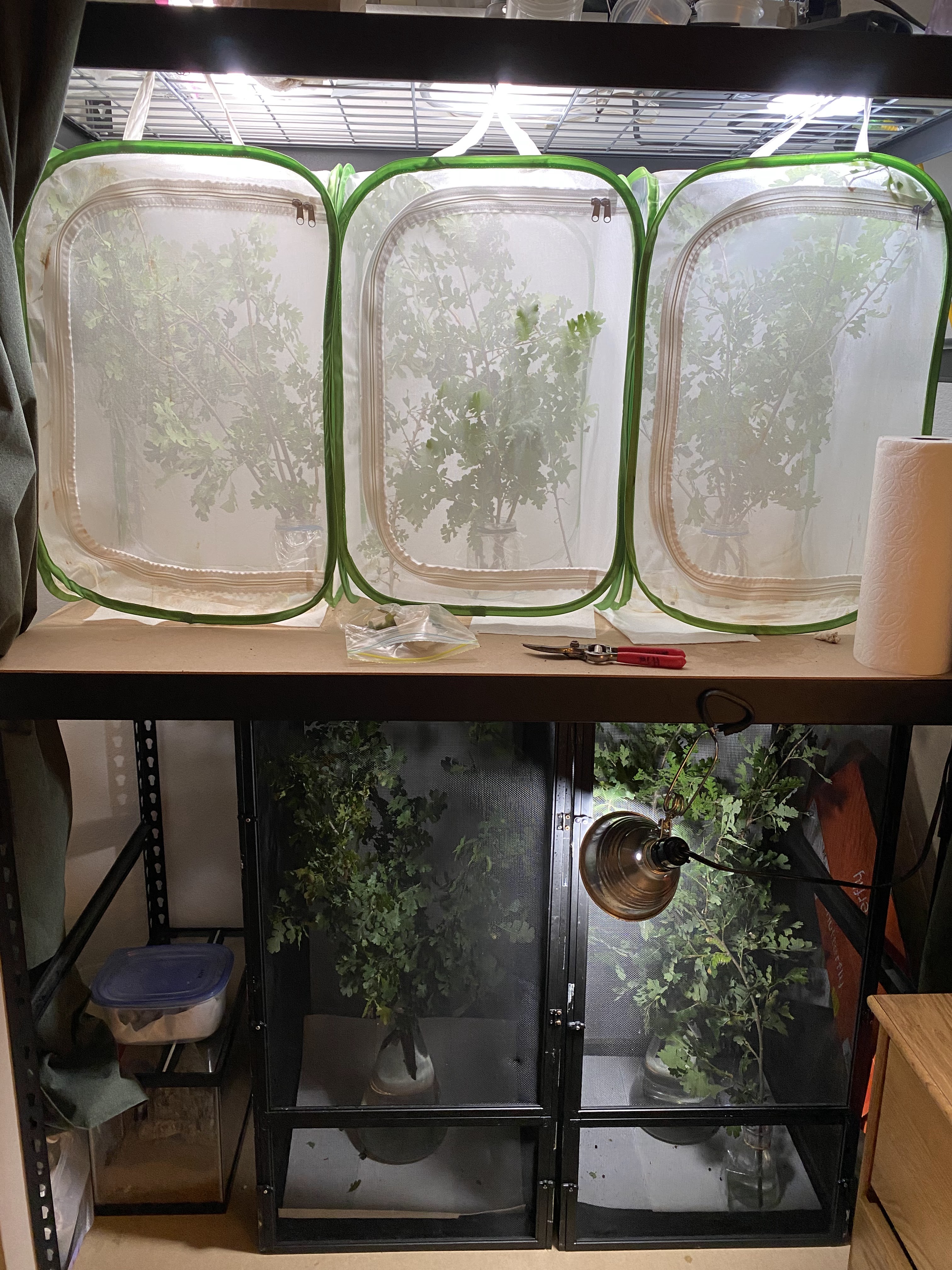
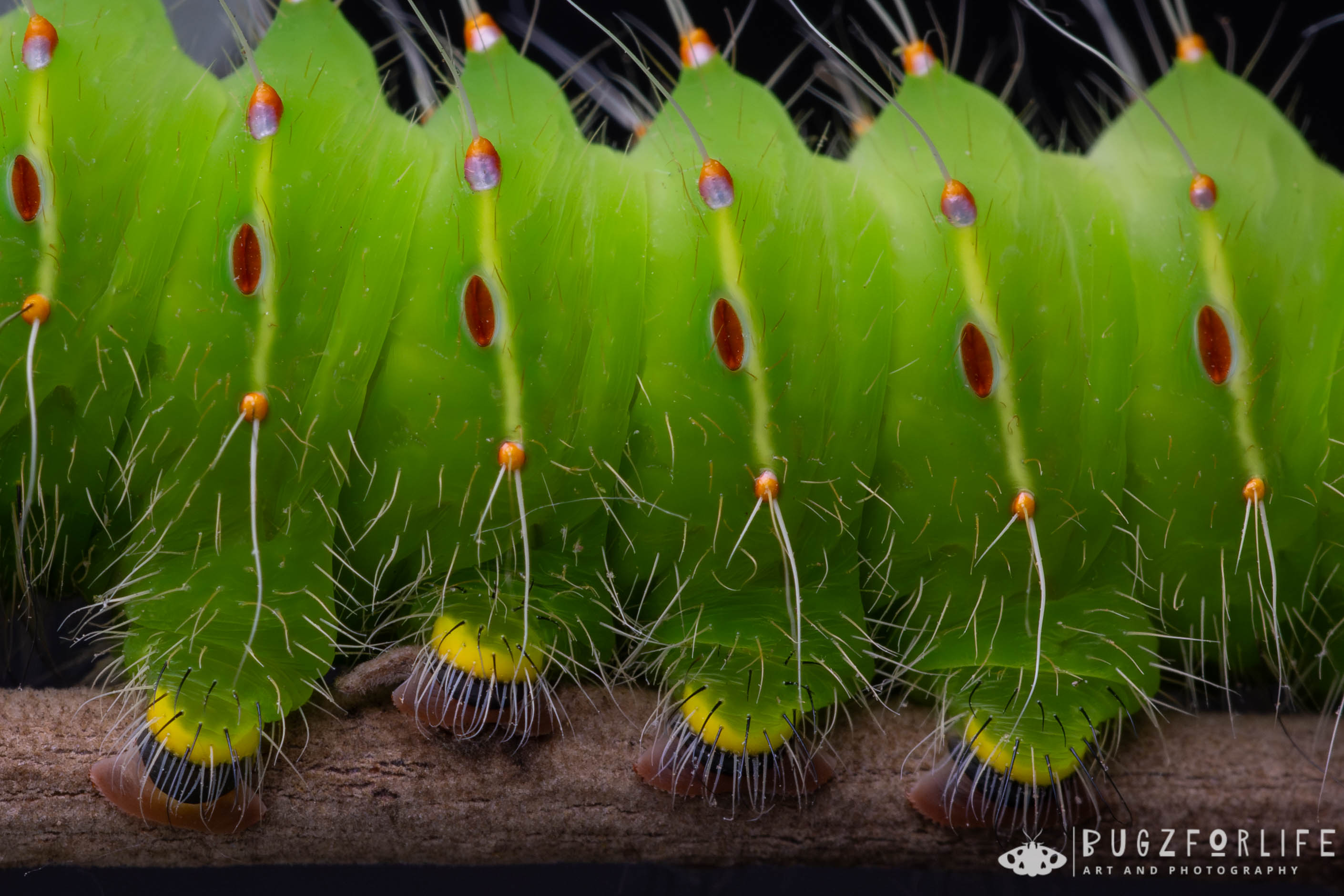
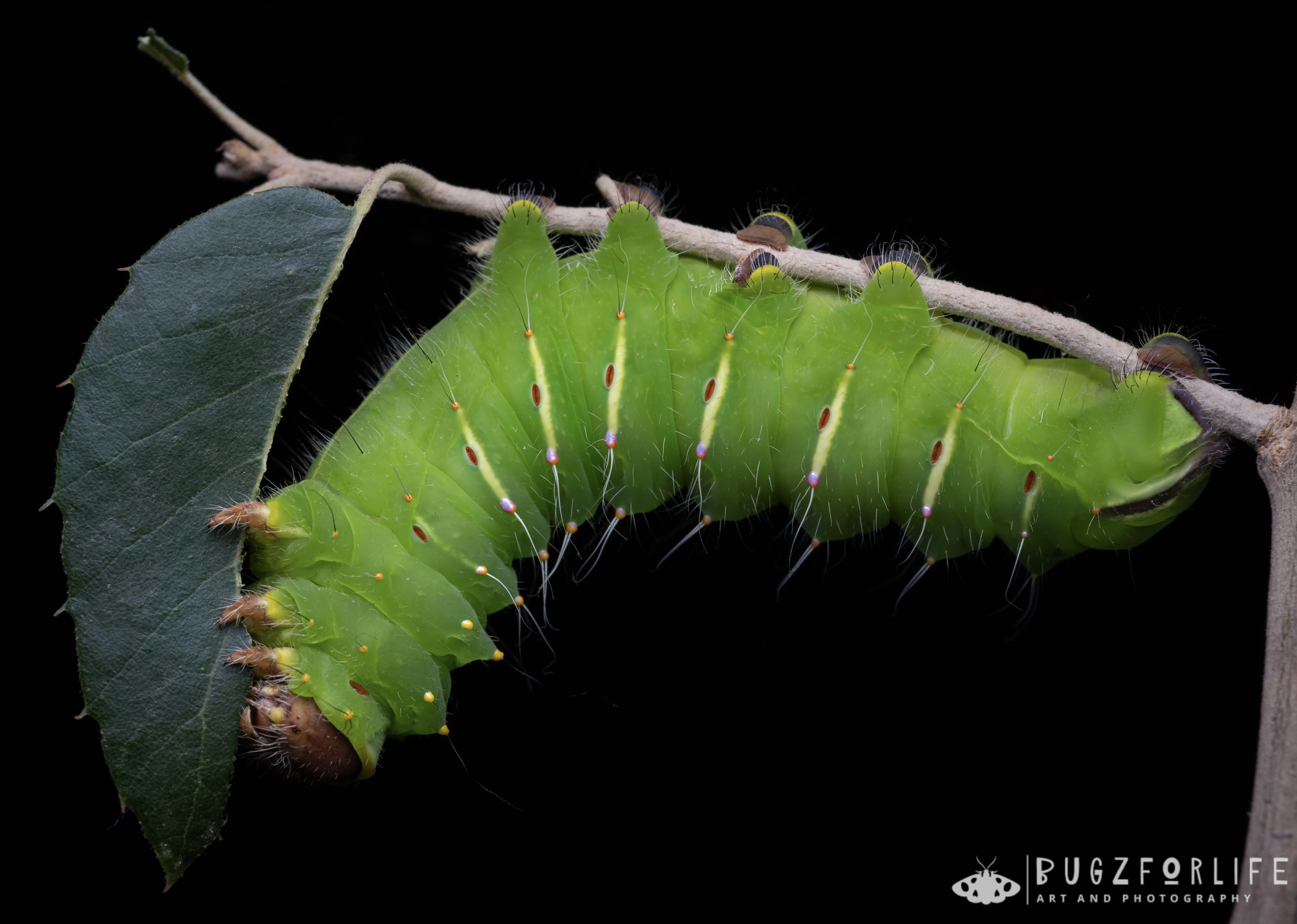
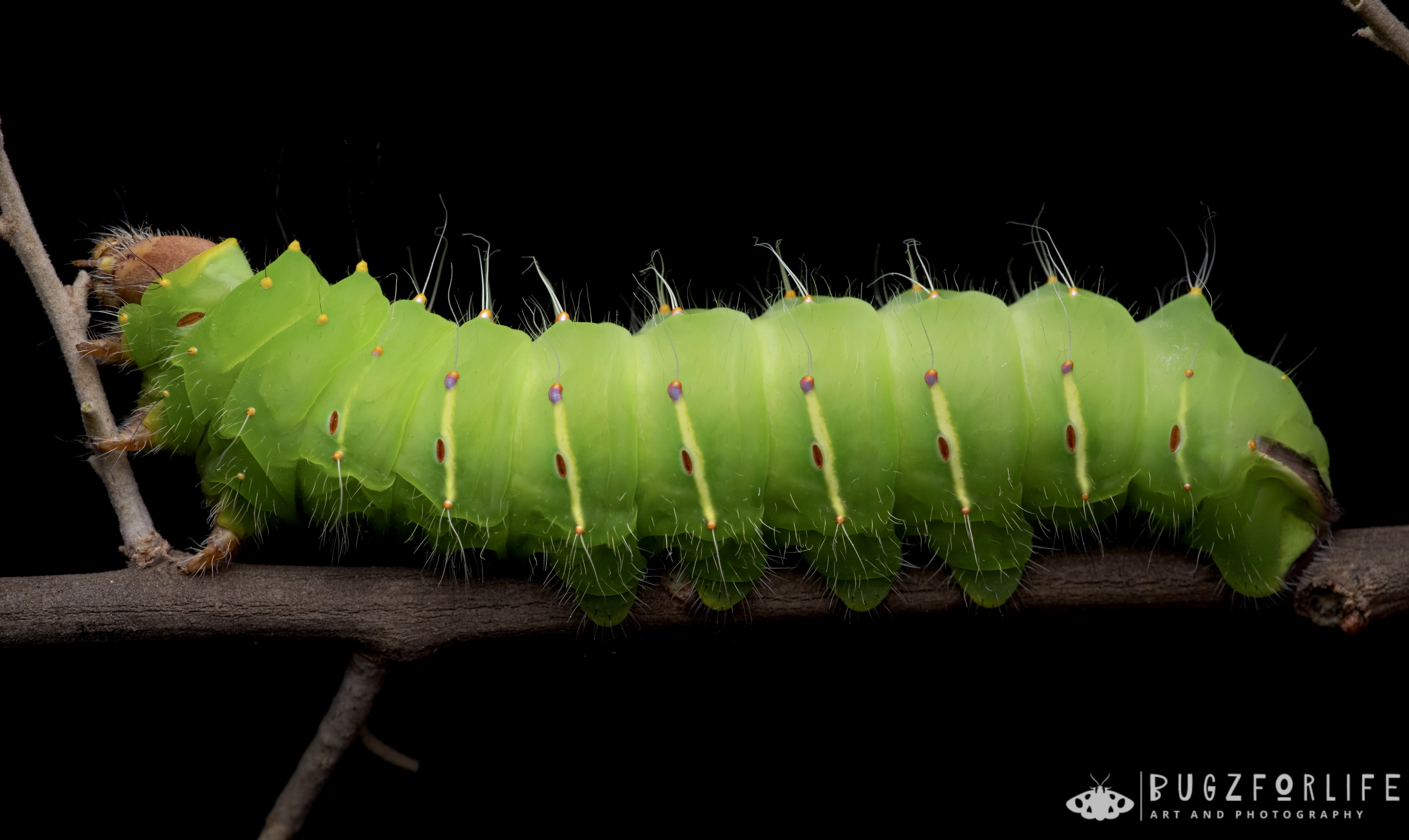
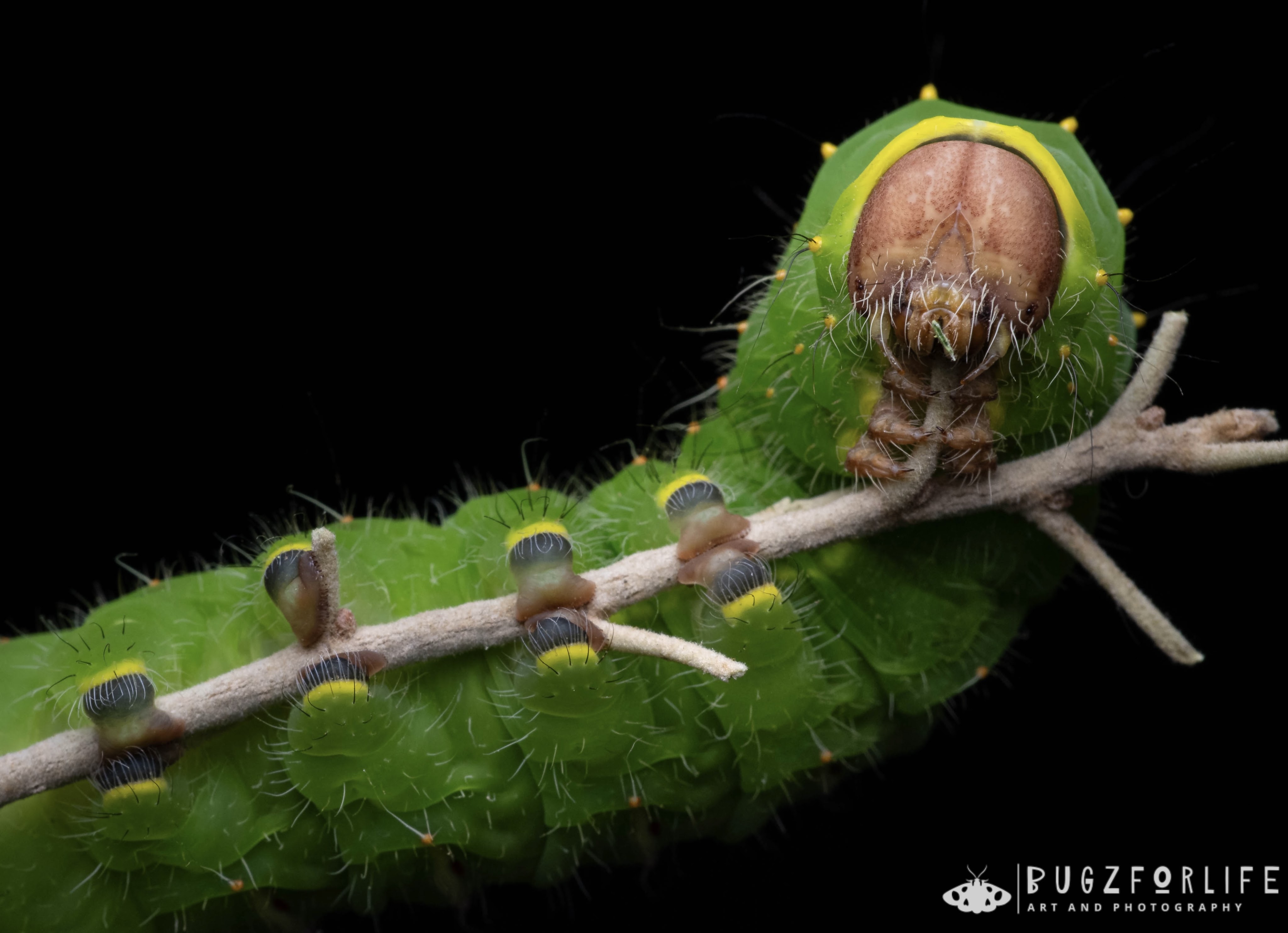
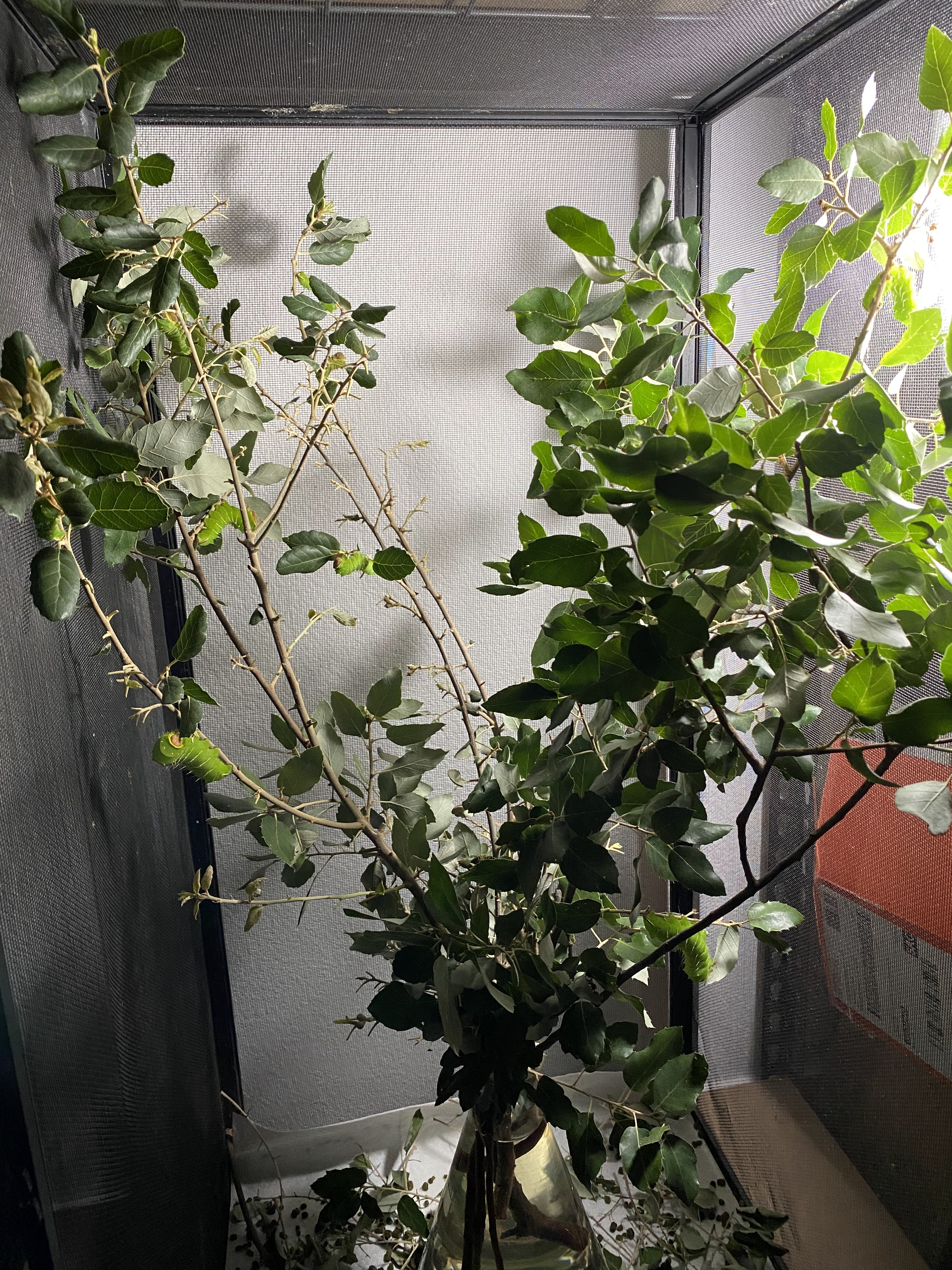
After the eggs begin to hatch, I carefully move their small container into a larger one that has the host leaves ready for consumption. As they begin to hatch, I make sure they all get onto the available leaves. This allows for high chance of survival through their remaining instars. They may wander for a bit right after hatching since the caterpillars do not aggregate and instead attempt to move away from each other. Once settled, these 1st instar caterpillars will eat quickly and after about 3-4 days begin their process to molt to their 2nd instar. The process from 2nd to 4th instar takes about 10-15 days depending on temperature and light availability. Once they eventually reach 5th instar, it becomes a race between how quickly can they consume their leaves and how quickly can you replace them. At 5th instar they get to a point where I have had to cut whole branches just to meet their demands. Eventually, this comes to an end and the caterpillars then begin the process of pupation.
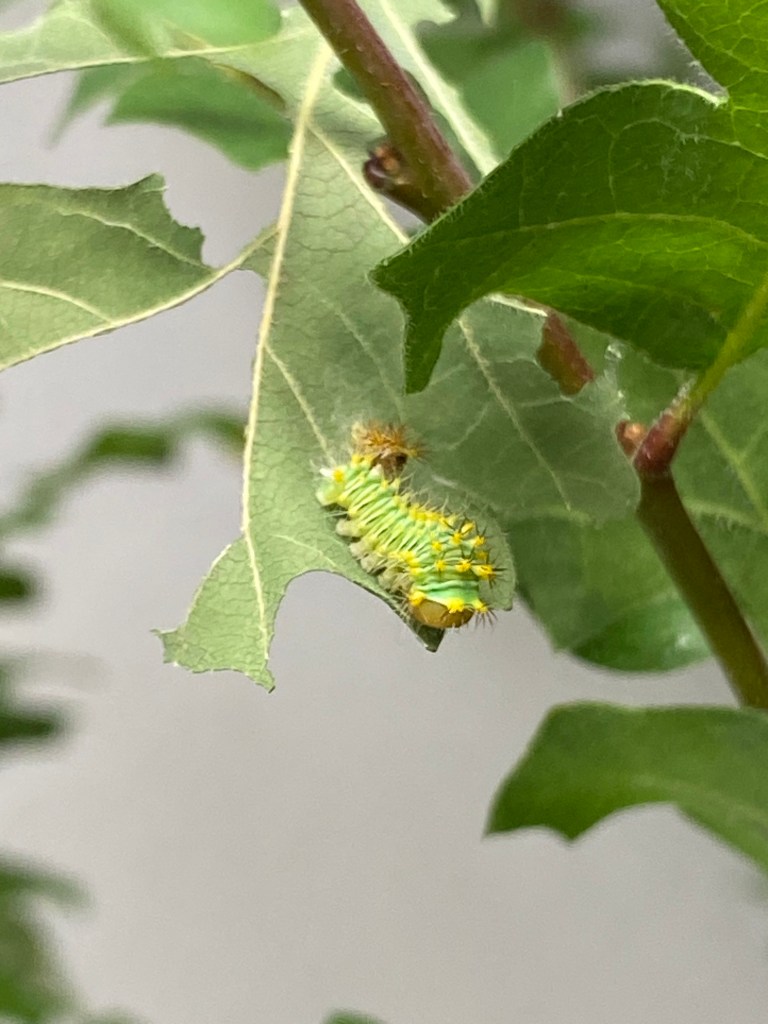
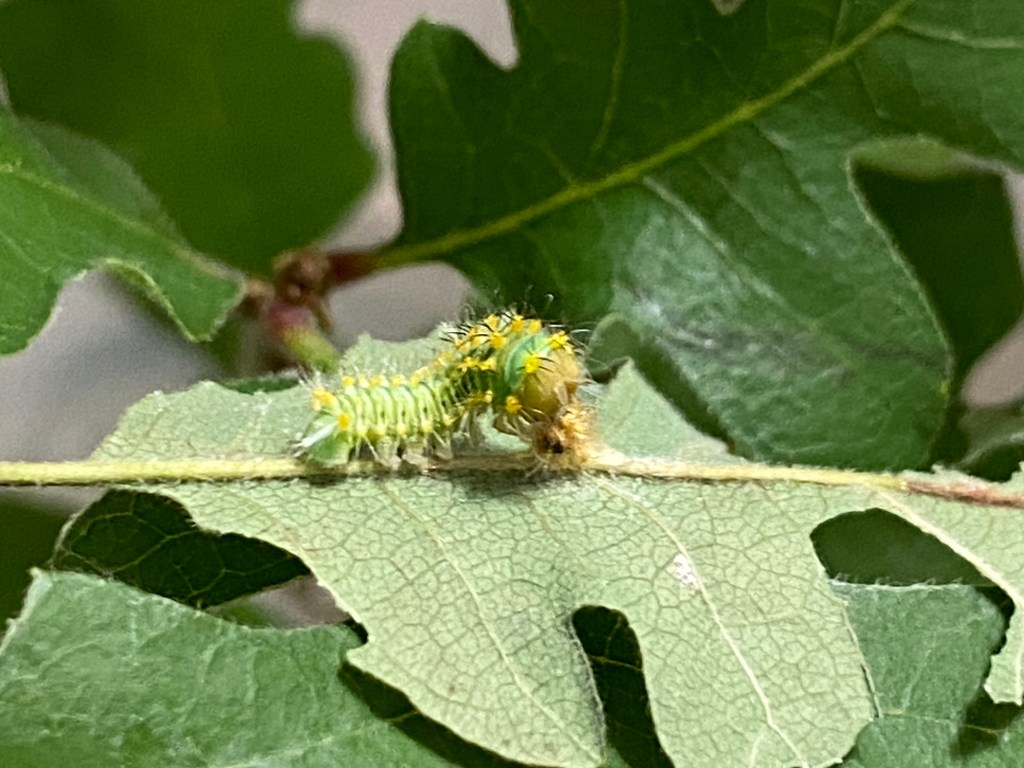
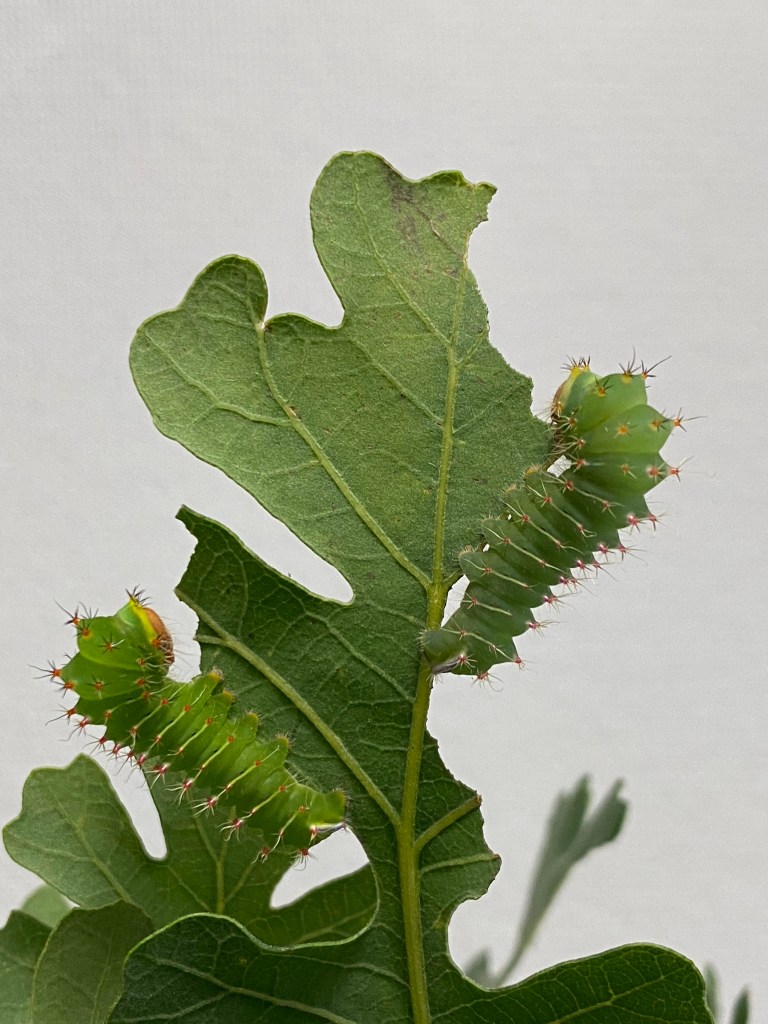
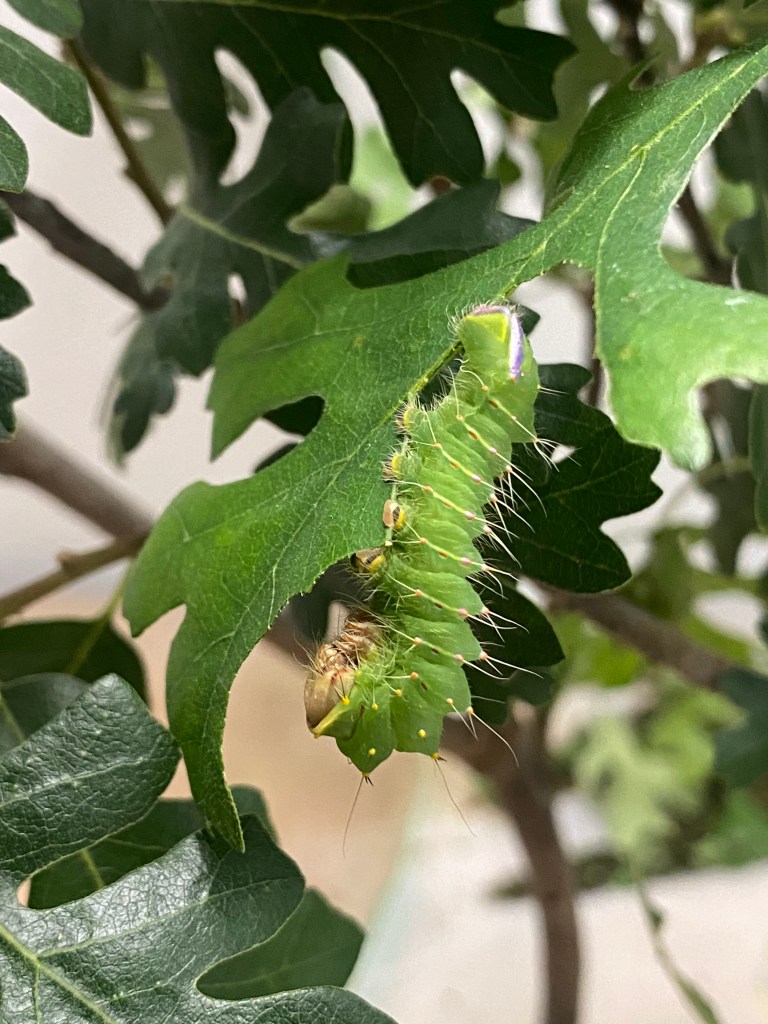
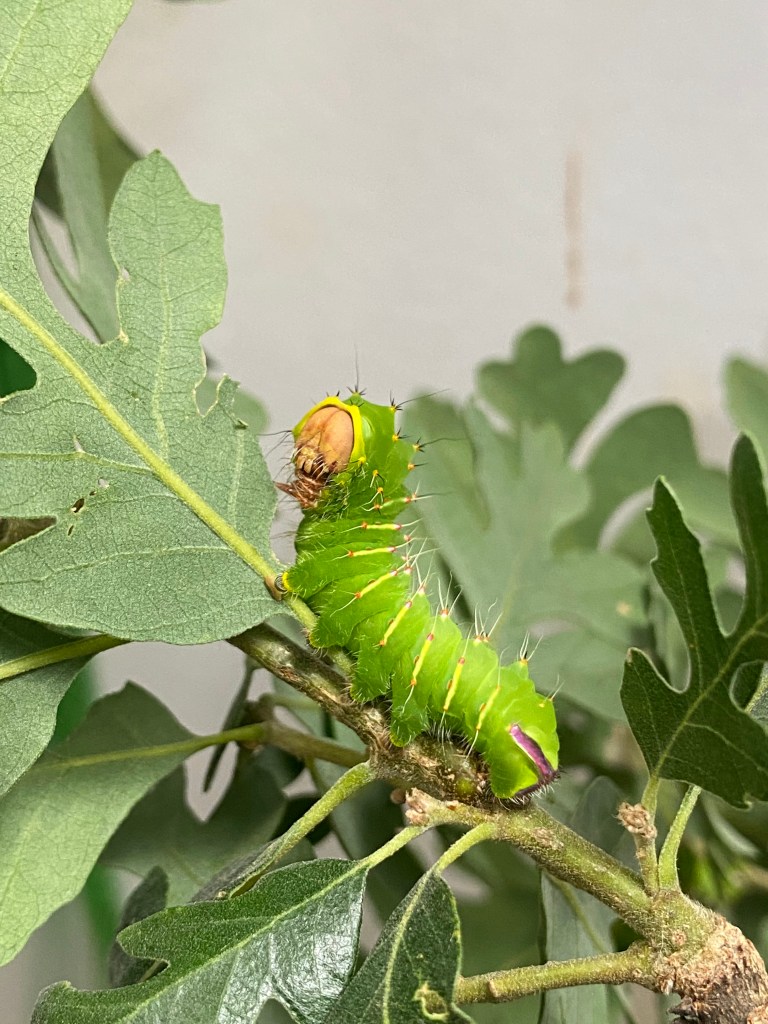
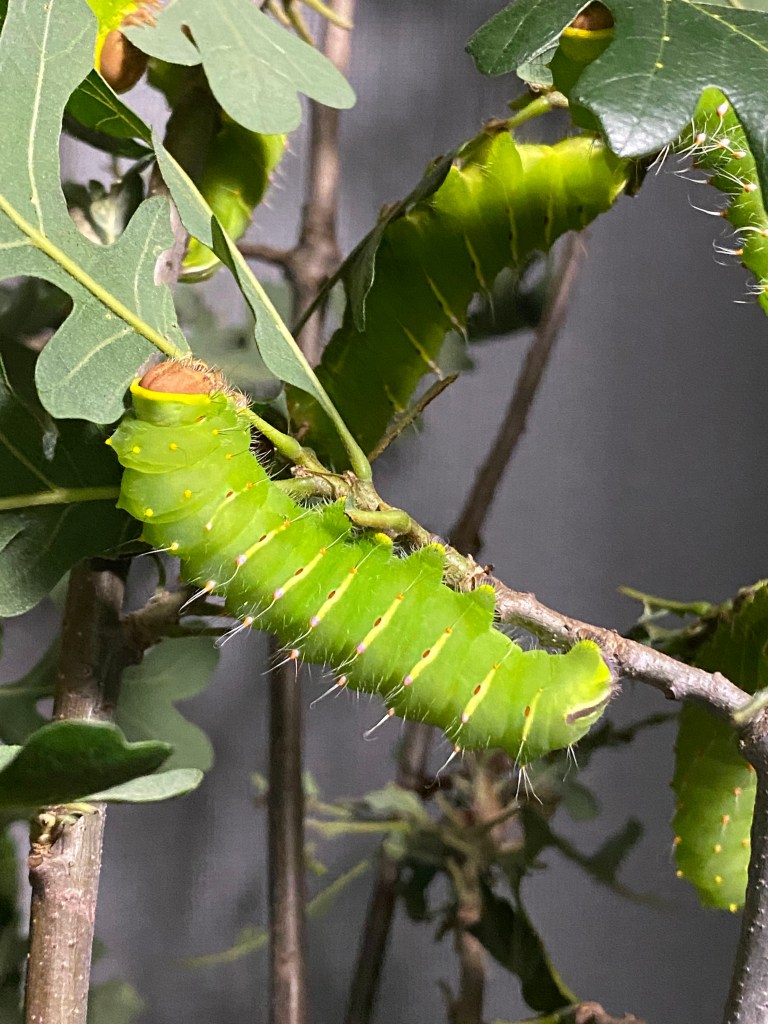
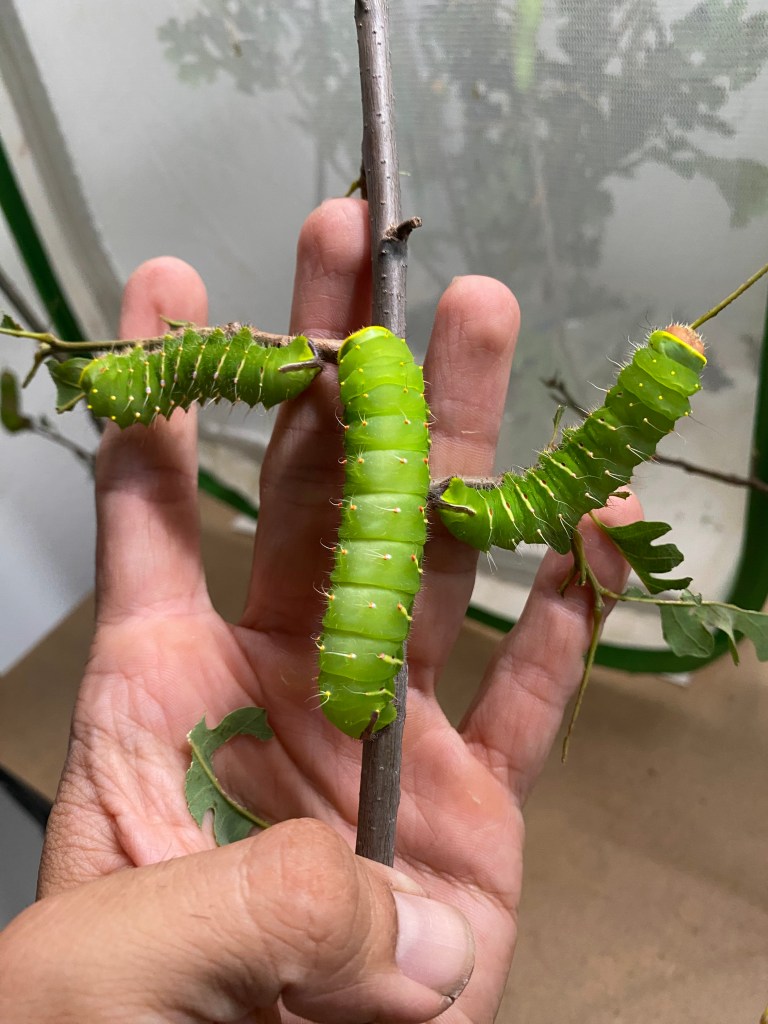
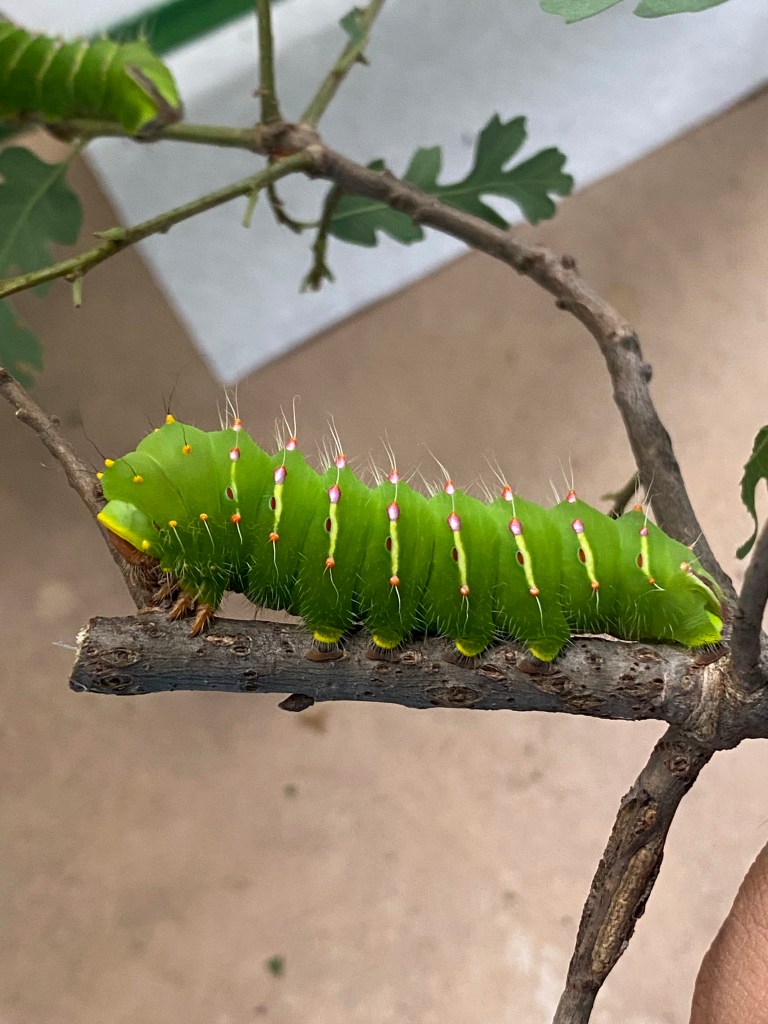
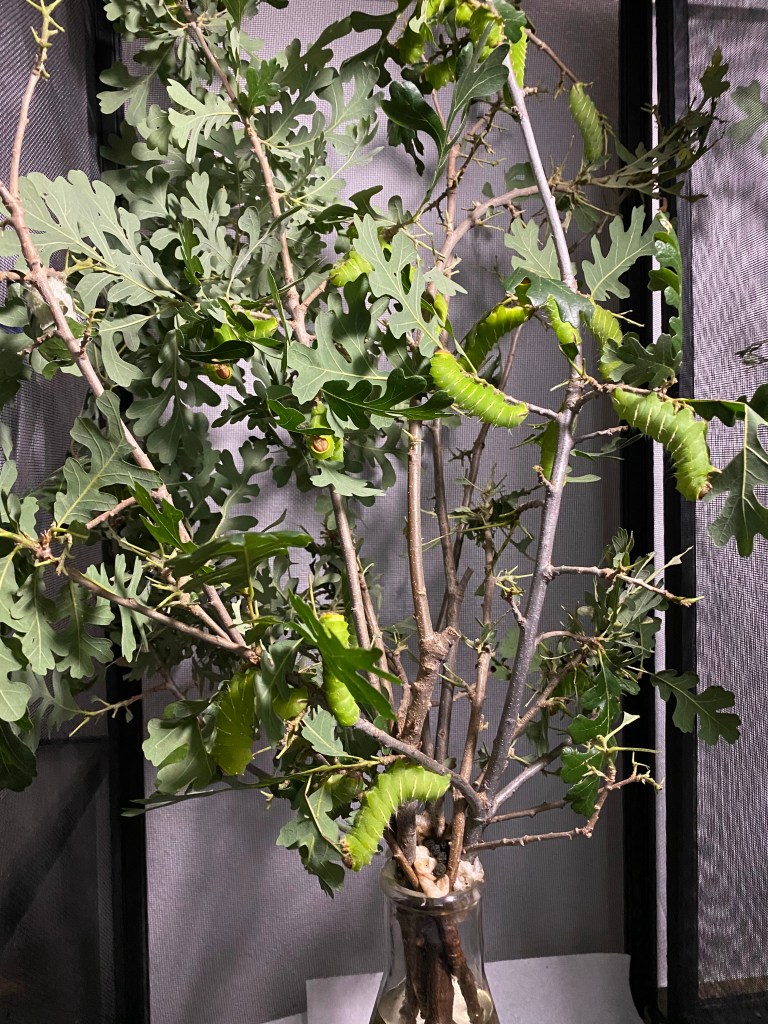
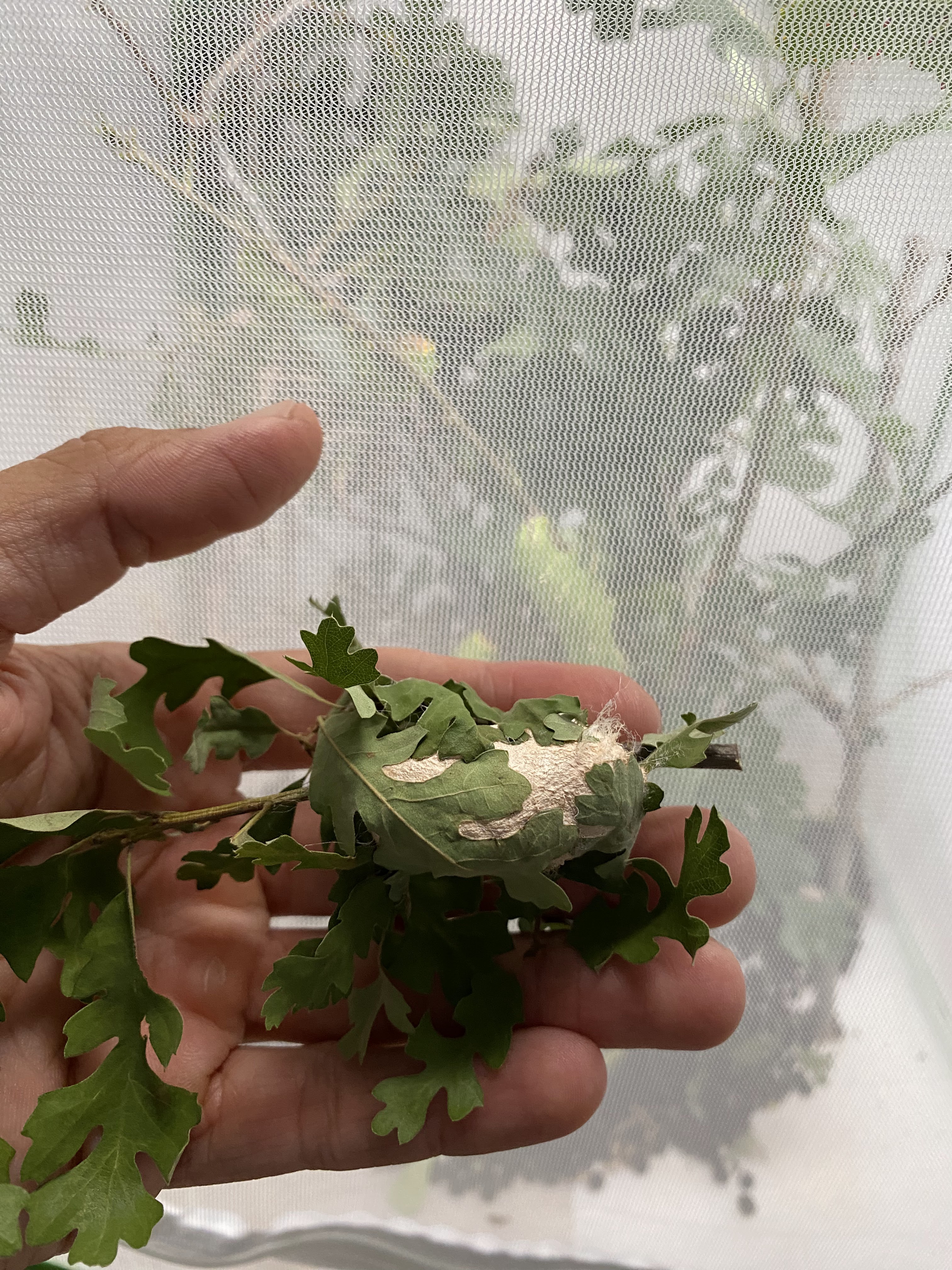
When the 5th instar caterpillars begin their journey to spin a cocoon, they first have to expel all the remaining waste in their body. This may seem like the caterpillar is dying, but rest assured it is part of the process. After this process, the caterpillars will begin to wander in search of a spot to spin their cocoon. The cocooning process takes about a day, while the actual pupation that takes place inside the cocoon take about 3-5 days.
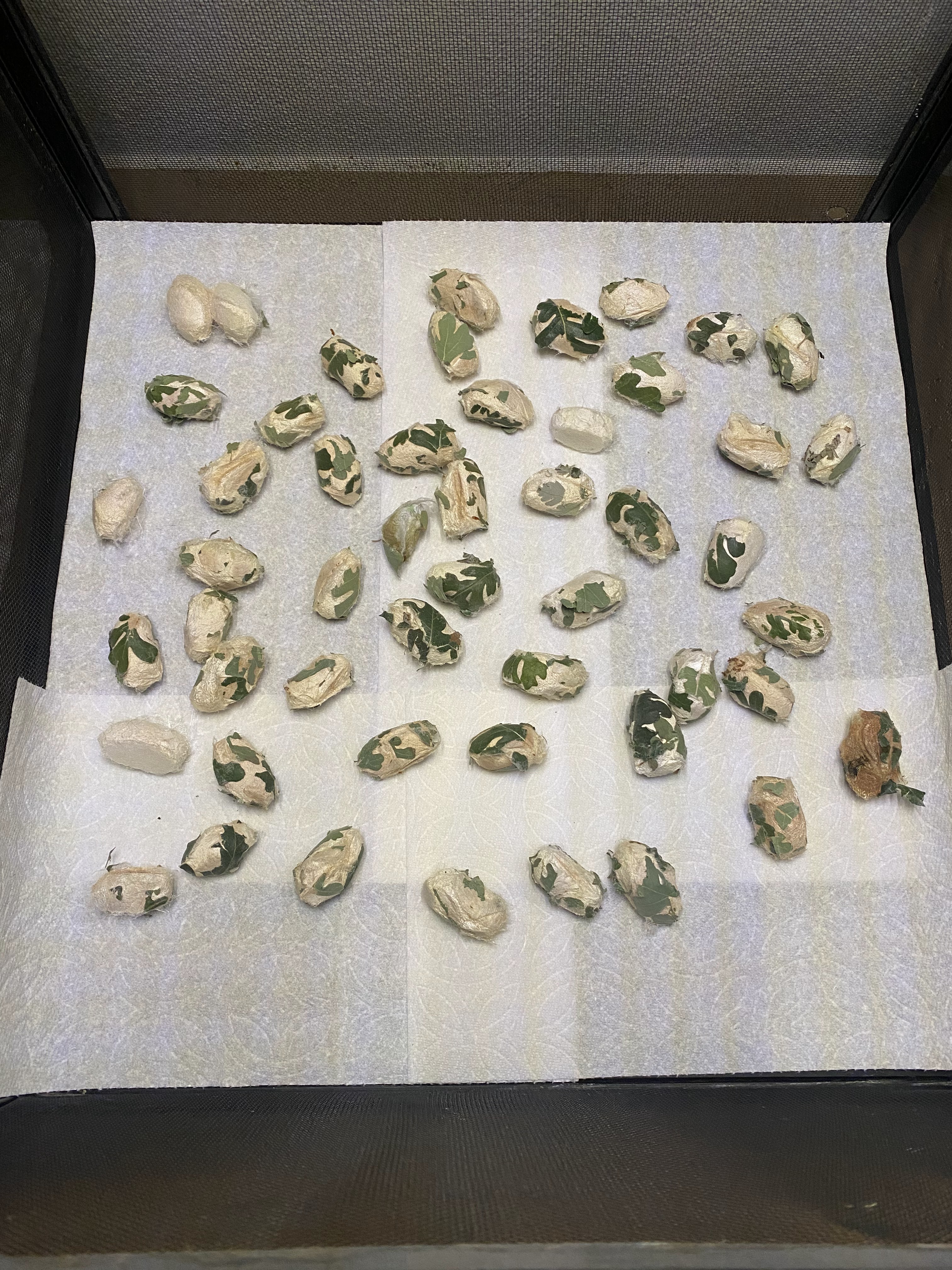
Once the cocoons are ready to be harvested, it is important to move them to a separate area where they area still exposed to the daylight. Cocoons spun in the late spring will emerge in summer and those spun in late summer will emerge the following spring. For cocoons that will be overwintering, be sure to place them in an area that stays cold for the winter or place them in a breathable container and keep them in the fridge. To avoid the desiccation in the fridge, you can lightly spray the cocoons every 2-4 weeks. The cocoons can be removed in early March and placed in a dry area that gets some sun exposure. The adult moths emerge in about 3-4 weeks and the whole process can start again.
Cocoon to Adult
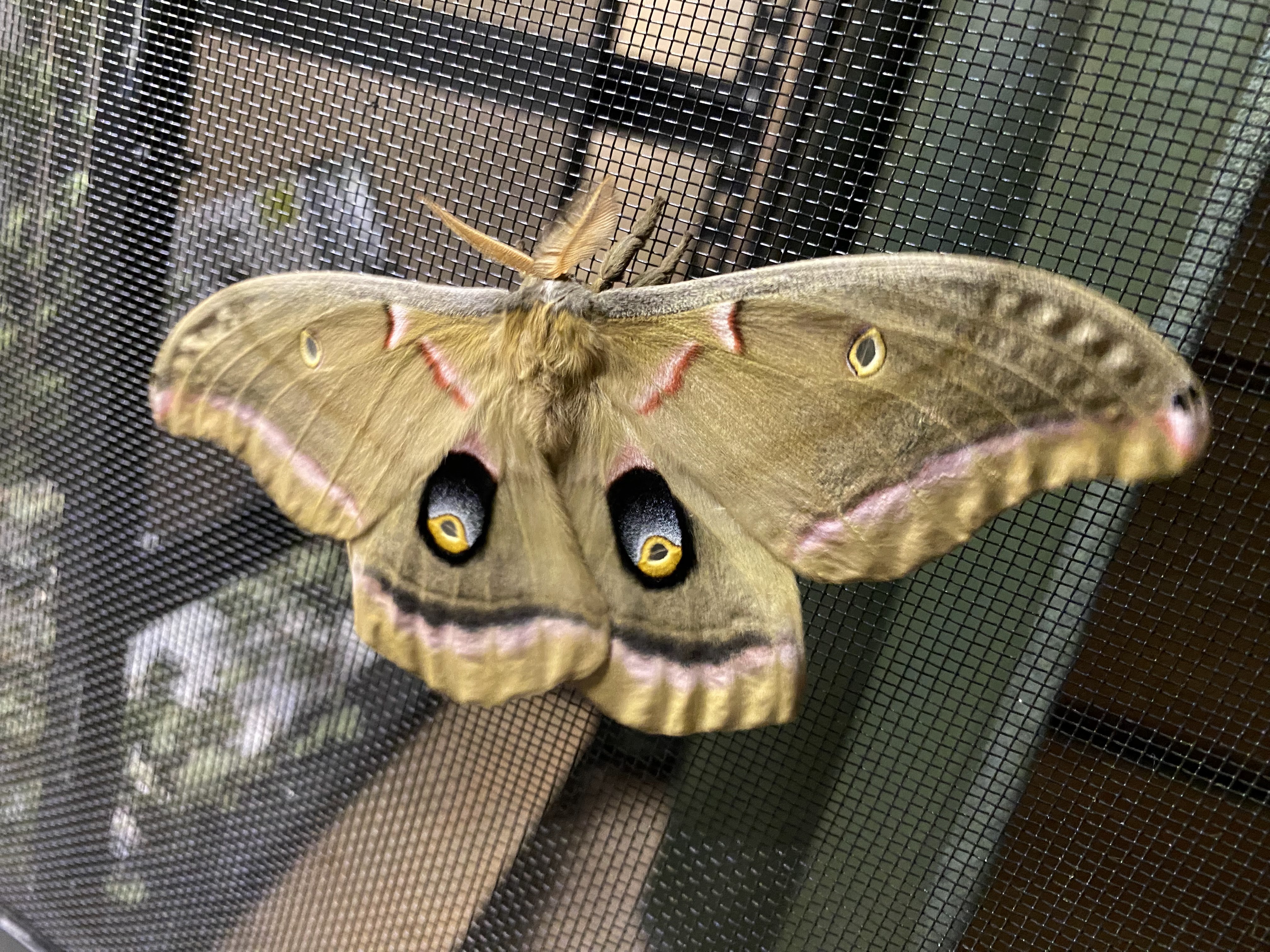
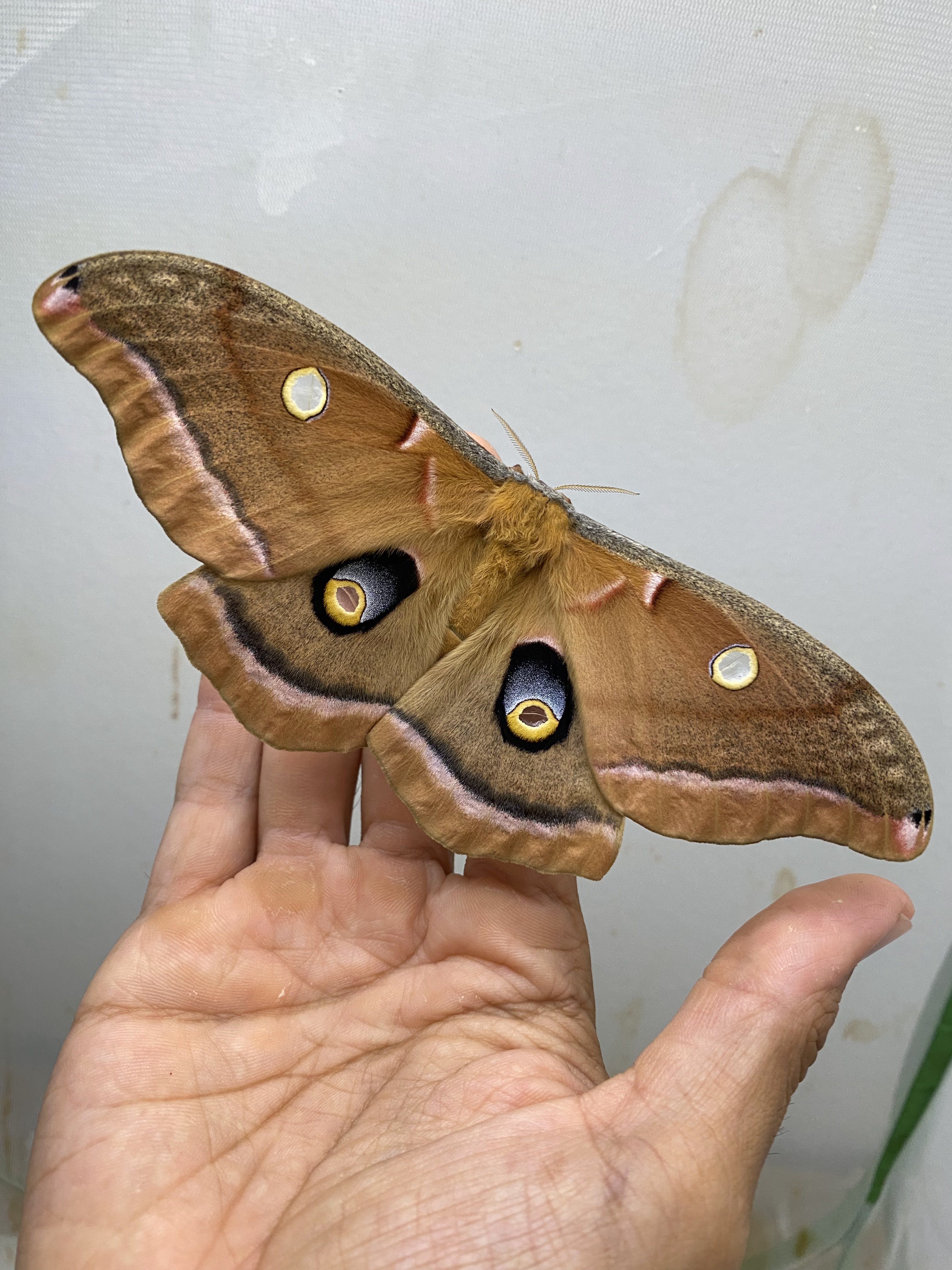
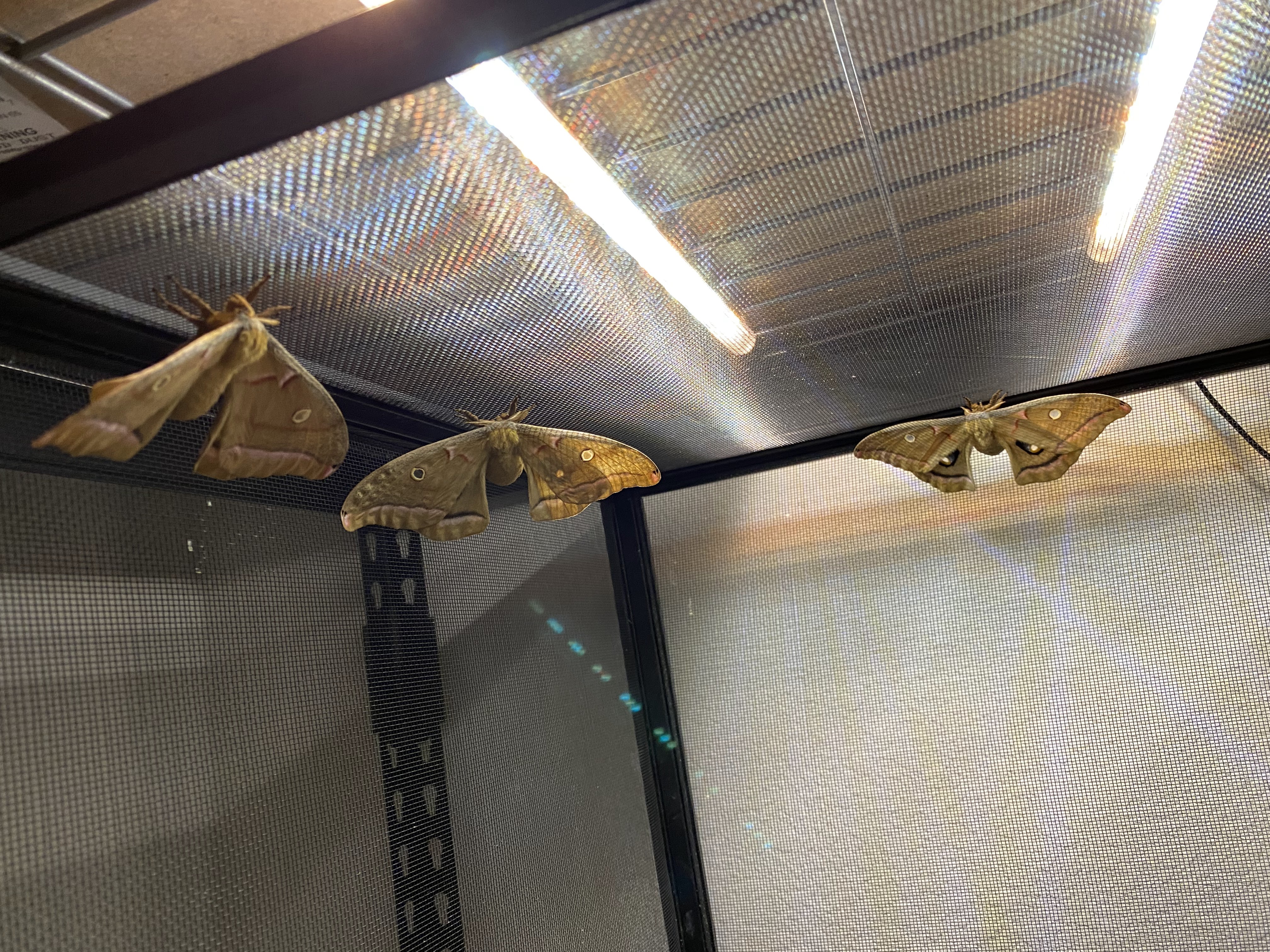
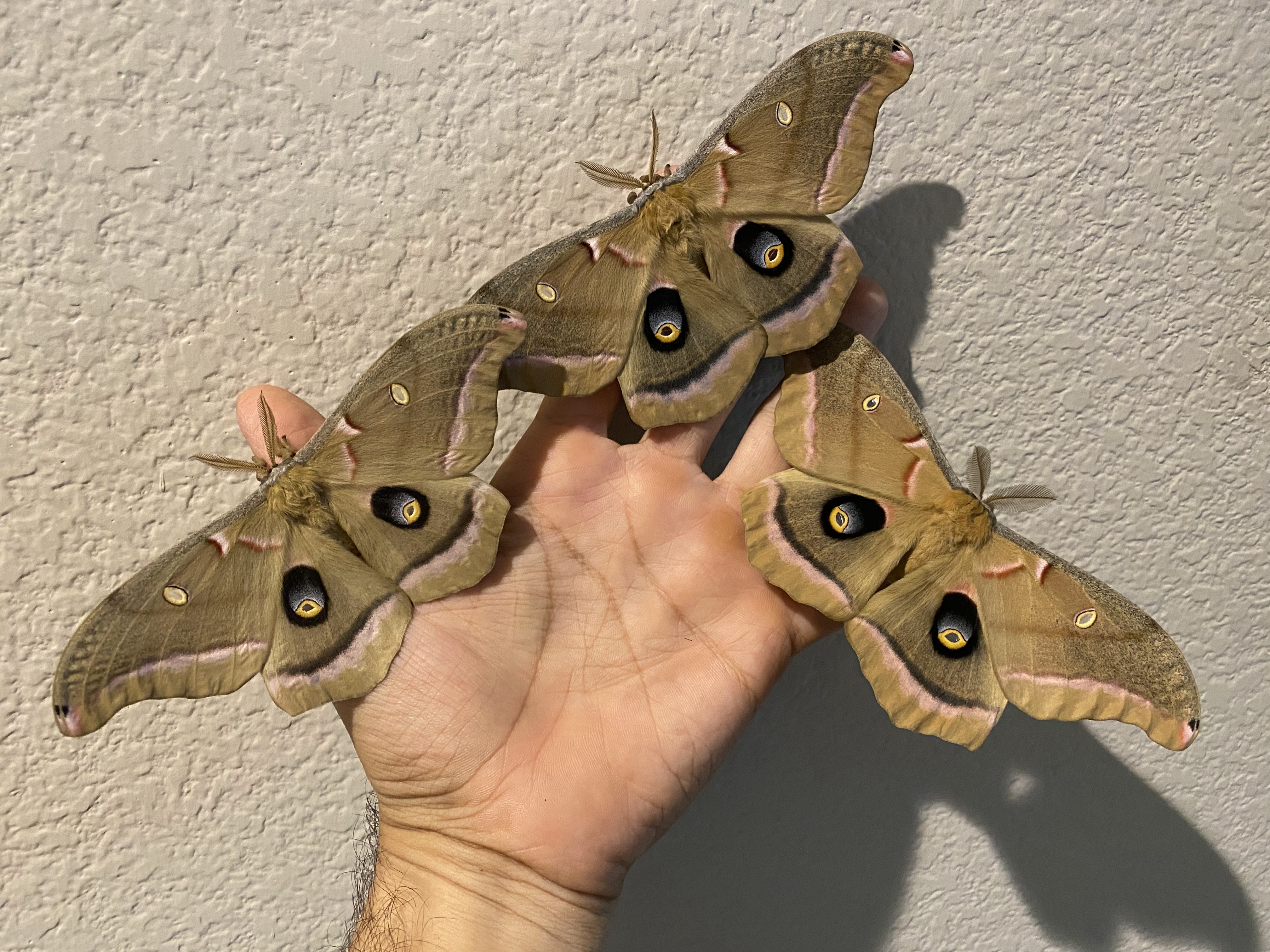
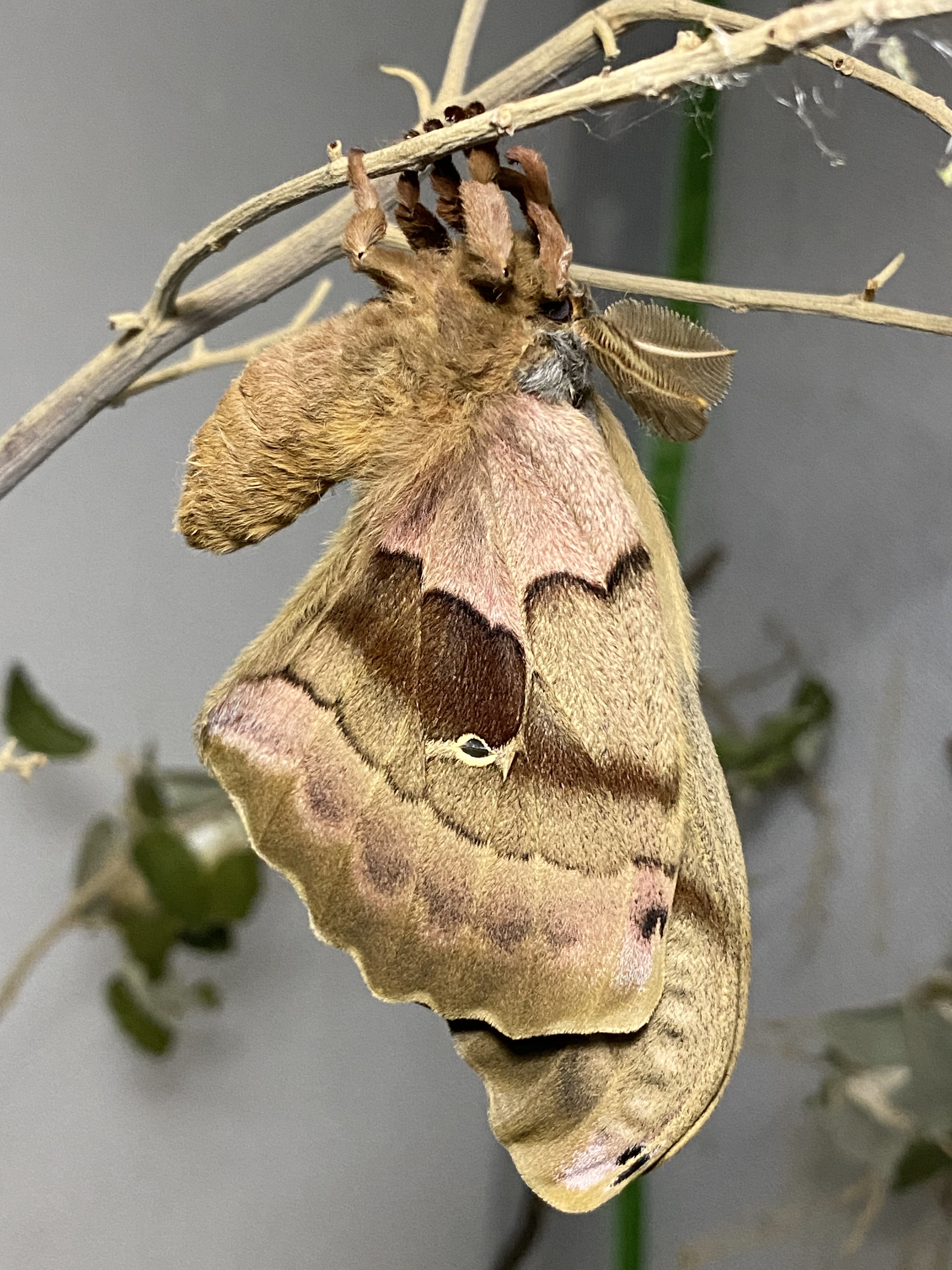
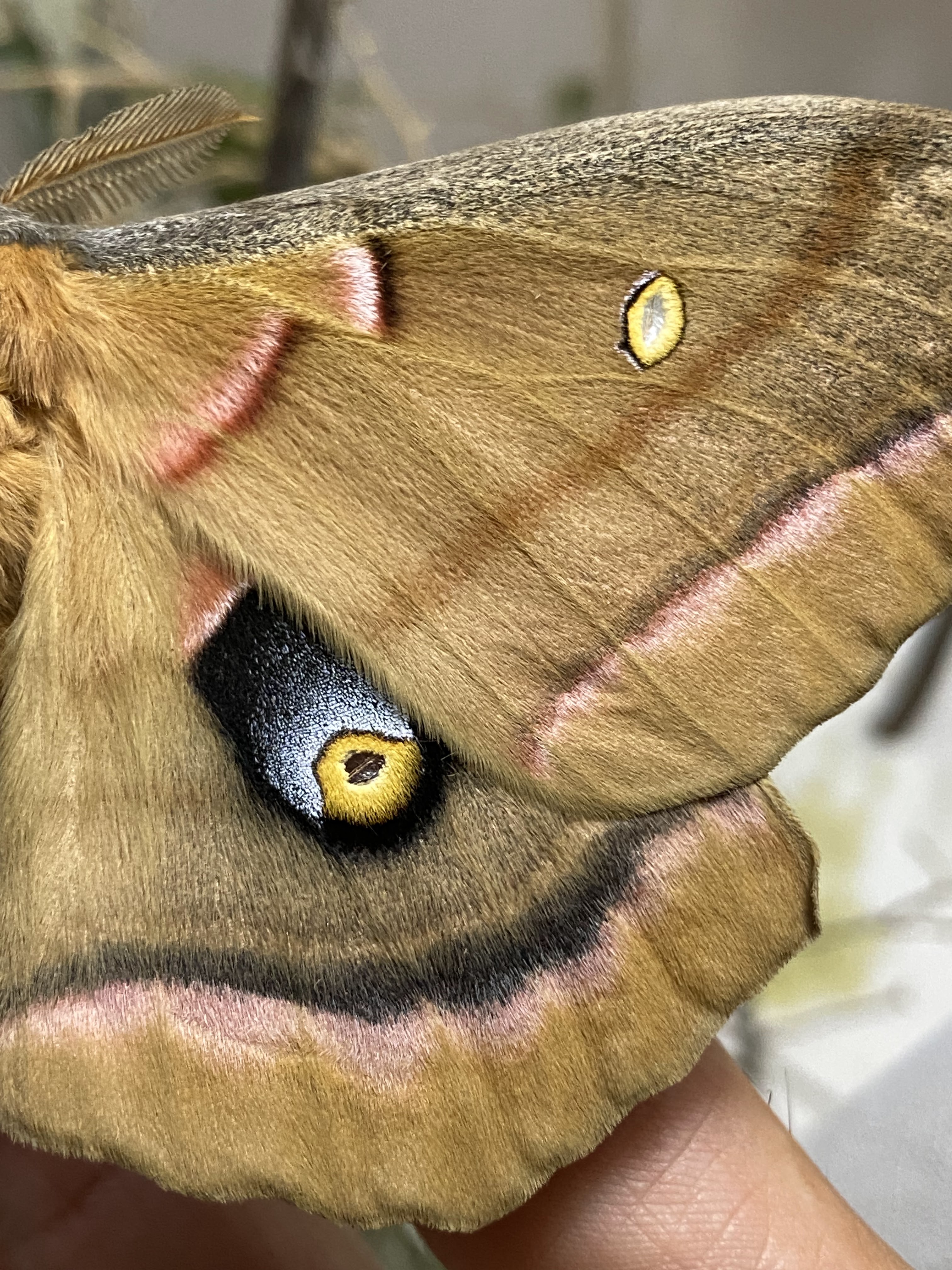
Adult moths will emerge over the course of a few weeks, with males emerging earlier than females until there is an overlap between the them. Females tend to be slightly larger than males, with larger spots on the forewings. Males tend to have slimmer forewings with slightly curved tips. In order to ensure the moths emerge with the local population, I recommend leaving them in a cage either outside or in an area where the cocoons get regular light to sync them with the day/night cycle. The emergence times vary depending on temperature, light, and location. These moths vary greatly in color, ranging from light beige to dark tan and light brown to almost burnt orange.
From my experience, their color depends mostly on location and temperature. If the local population has more of the beige/tan adults then that is what you will most likely see going from caterpillars to adults. However, despite the orange color morph being uncommon, it still pops up from time to time. Out of the hundreds of polyphemus moths I’ve raised, I believe I’ve only had the orange morph appear in less than 10 individuals. If the moths emerge with the local populations you can start the cycle all over again.
Other Care Tips
When raising these caterpillars there are other details you should consider. Going from egg to about 3rd instar is the most challenging stage of development. The reason is because this is when they are the most susceptible to disease and infections, so it is important to keep their containers dry and make sure they are not in contact with their frass (poop). The populations of polyphemus moth present in the Sac-Yolo Basin have adapted to a hot and dry environment, so spraying the caterpillars with water is not necessary. This just increases the moisture in their cage and can cause the spread of disease, especially if there is frass present and it too gets wet.
To ensure a high rate of survival you will need to:
- keep humidity low
- not spray caterpillars with water
- remove their frass in a timely manner
- ensure proper ventilation
- separate large groups of caterpillars into smaller ones to avoid overcrowding
Host Plant alternative list (Sac-Yolo Basin):
- Cork oak (Quercus suber)
- Interior/Coast Live oak (Q.wislizeni/agrifolia)
- Willow (Salix sp.)
- Maple (Acer sp.)
- Walnut (Juglans sp.)
- Prunus sp. (plum, peach, apricot, cherry, etc.)
For the future, I will continue to raise these moths and will have either eggs or cocoons available if anyone is interested. Feel free to contact me if you would like to try yourself! Be sure to check my Instagram (bugzforlife) if you want to see more frequent updates on what stage these moths are at. Hope this quick guide helps you in your journey to raise these amazing moths.

