
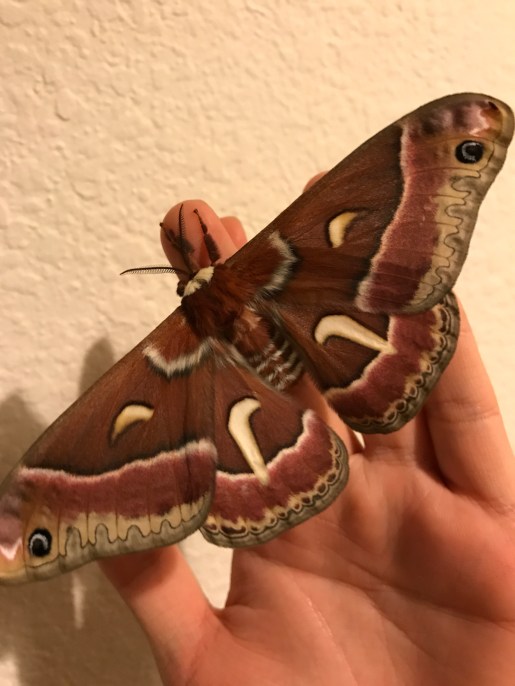
I was very excited to see these caterpillars progress and I was amazed by the variability of their colors and tubercles. Due to the fact that this was a first time for me, I really had no idea what to expect from these caterpillars. Another piece of information I was given, is that the female in which these caterpillars came from was found in a “blend zone” of H. euryalus and H. gloveri. This blend zone is an area in the eastern sierra and western Nevada where these two species have been known to interbreed naturally and produce viable offspring. H. gloveri looks somewhat similar to H. euryalus with some minor color differences on the wings, but the caterpillars tend to have differing color traits. H. euyalus has white tubercles on their sides, while H. gloveri’s are blue. There was definitely some color variability like this in the caterpillars and because of this I am very excited to have some possible blending in the adults when they emerge next spring.
The Fast Growing Green Eating Machines
Almost exactly a week after the caterpillars molted into their third instars, they all successfully molted into their fourth. This fast progression was mostly due to the food plant (Madrone tree) and the very warm weather my area was getting. As an added bonus the caterpillars were also getting quite large and all had distinct variation of tubercle shape/color. No two caterpillars looked the same and the high amount of physical variation made this experience even more exciting to me. At fourth instar I was changing their food plants somewhat regularly but it wasn’t until they molted into their fifth instar was obtaining food plant for them an almost constant task.


Once all these hungry little beasts reached their fifth instar, they began to completely defoliate all the branches of Madrone tree that I would give them to eat. Within two to three days the branches I had placed in their cage were completely eaten away and I would have to cut more for them very quickly or else they would become stressed and possibly pupate early. Thankfully I never let it get to that point and they were always well fed, allowing for them to reach very large sizes (Some reaching almost three and a half to four inches in length). About a week or so after they went to fifth instar, they all decided to begin spinning cocoons at the same time.


The variation among the individual caterpillars was strongest at their fifth instar, which could have been indicative of the mixed genes from female who laid these eggs, being in the blend zone between euryalus and gloveri. Now that all of the caterpillars have successfully spun their cocoons, I am hopeful that there will be at least some kind of variation among the adults when they emerge next spring. This species only has one brood per year, so in order to see the adults one has to wait almost a full year. Due to the warm weather and host plant I used, these caterpillars finished their larval stage in about 31 days. I was very glad to rear these chunky green eating machines successfully for the first time from egg to cocoon. Now begins the long wait time before I get to see the adults and hopefully, when they do emerge, I get a good mix of both sexes.


 The Adventures of Mothman
Hi Mothman this is Richard Walbridge, I live in Roseville CA, a retired Jr high science teacher that loves the giant Saturnid silk moths. I exceptualy love the Ceanothus (RUBRA) Silk moths. I knew Mike Collins and have his book on silk moths. I would love to start breeding them and others. Can you help me get started I’m in my late 70so I don’t get around much but really would like to keep in contact with you. Thanks for your time.
LikeLike
Hello Richard,
I would be more than happy to help you get started raising large silk moths! I don’t currently have any egg or cocoon stock of the Ceanothus silk moth, but I do have Polyphemus caterpillars going. I might have more inventory once I head up to the Sierras in late June, but as of right now I wouldn’t be able to provide any livestock until next spring. If you would like to keep in contact with me, you can either email me or add me on Facebook if you have a profile there. My personal email is joelmoths91@gmail.com so feel free to send me an email there with any questions you might have.
Best,
Joel
LikeLike